



Corporate Event Accessibility Checklist: A Guide to ADA Compliance
By Sarah Forbes Martin, Experience Epic Events
Creating an accessible corporate event is not just a legal obligation but a moral imperative that fosters inclusivity and engagement. An accessibility checklist serves as a vital tool for event planners to ensure compliance with the Americans with Disabilities Act (ADA) and to create an environment where all attendees can participate fully. This article will guide you through the essential components of an accessibility checklist, focusing on ADA compliance, inclusive planning strategies, and best practices for enhancing event experiences. Many organizations struggle with ensuring that their events are accessible to everyone, which can lead to exclusion and dissatisfaction among attendees. By implementing a comprehensive accessibility checklist, you can address these challenges effectively. We will explore key areas such as ADA compliance requirements, inclusive planning strategies, and how to develop an effective accessibility checklist for corporate events.
ADA Compliance
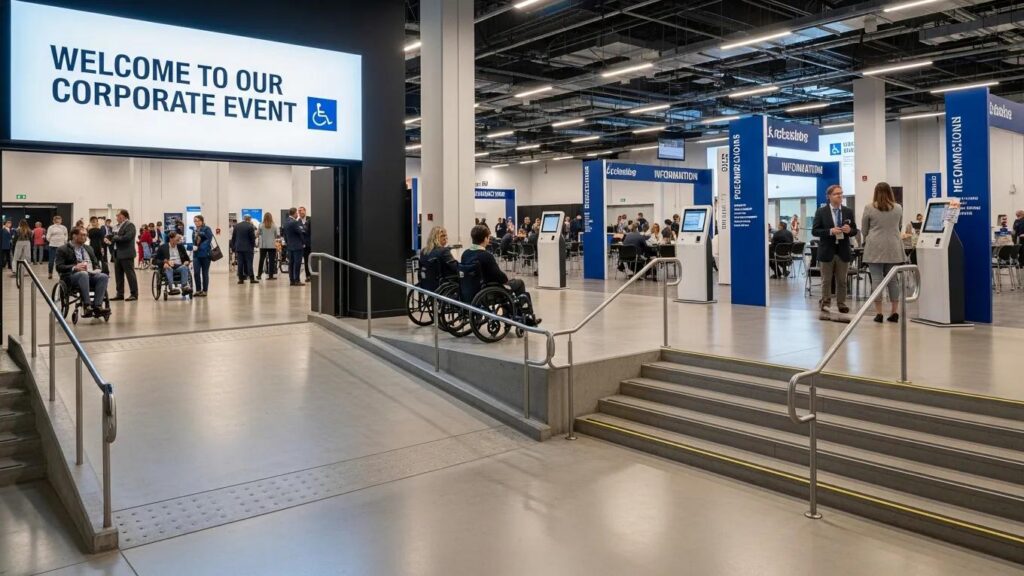
ADA compliance is crucial for corporate events, ensuring that venues and services meet the legal standards set forth to accommodate individuals with disabilities. Compliance involves various physical accessibility requirements, including seating arrangements, restroom facilities, and clear pathways. Understanding these requirements is essential for creating an inclusive environment that welcomes all participants.
Further emphasizing the importance of legal adherence, one study highlights the regulatory aspects of ADA compliance in event operations.
ADA Compliance in Event Operations Planning
These operational functions include regulatory aspects such as compliance with the Americans with Disabilities Act (ADA
Planning and Accessibility Issues in Venue/
Event Operations, AM Moorman, 2020
Which Accessibility Features Must Corporate Venues Provide?
Corporate venues must provide several key accessibility features to comply with ADA standards. These include:
Step-Free Access: Ensuring that all entrances and exits are accessible without steps or barriers.
Clear Signage: Providing visible and easy-to-read signs that guide attendees throughout the venue.
Emergency Procedures: Establishing clear emergency protocols that accommodate individuals with disabilities, including accessible evacuation routes.
These features are fundamental in creating a welcoming atmosphere for all attendees, ensuring that everyone can navigate the event space safely and comfortably.
How Do ADA Standards Influence Event Inclusion Policies?
ADA standards significantly shape event inclusion policies by establishing legal requirements that organizations must follow. These standards impact event design by mandating accessible seating, restrooms, and pathways. Additionally, adhering to ADA guidelines promotes inclusivity, allowing individuals with disabilities to participate fully in corporate events. Organizations that prioritize ADA compliance not only fulfill legal obligations but also enhance their reputation and foster a culture of inclusivity.
Inclusive Planning Strategies
Inclusive planning strategies are essential for ensuring that corporate events cater to diverse audiences. By implementing these strategies, event planners can create an environment that respects and accommodates the needs of all attendees.
Diverse Programming: Offering a variety of sessions and activities that appeal to different interests and abilities.
Feedback Mechanisms: Establishing channels for attendees to provide feedback on accessibility and inclusivity, allowing for continuous improvement.
Language Support: Providing translation services and materials in multiple languages to accommodate non-native speakers.
These strategies not only enhance the overall experience for attendees but also demonstrate a commitment to inclusivity and respect for diversity.
Best Practices for Accessible Event Experiences
To create accessible event experiences, planners should follow best practices that prioritize the needs of all attendees. These practices include:
Early Planning for Accessibility: Incorporating accessibility considerations from the outset of the planning process to avoid last-minute adjustments.
Technology Utilization: Leveraging assistive technologies, such as hearing loops and captioning services, to enhance accessibility.
Staff Training: Ensuring that all staff members are trained in accessibility protocols and are prepared to assist attendees with disabilities.
By following these best practices, event planners can create a more inclusive environment that fosters engagement and participation.
Experience Epic, LLC specializes in delivering accessible and inclusive corporate events. Our expertise in event planning services ensures that your event meets all ADA compliance requirements while providing a welcoming atmosphere for all attendees.
How to Develop an Effective Accessibility Checklist for Corporate Events?
Developing an effective accessibility checklist is essential for ensuring that all aspects of an event are accessible. This checklist should include key components that address various accessibility needs.
Key Components of a Checklist: Include items such as venue accessibility, transportation options, and communication accessibility.
Best Practices: Regularly review and update the checklist to reflect current standards and best practices in accessibility.
Common Considerations: Consider the specific needs of your audience, including mobility, sensory, and cognitive disabilities.
By creating a comprehensive checklist, event planners can systematically address accessibility concerns and ensure a successful event.
What Disability Accommodations Should Be Included in Your Checklist?
When developing an accessibility checklist, it is crucial to include specific disability accommodations, such as:
Transportation Options: Providing accessible transportation services for attendees with mobility challenges.
Communication Accessibility: Ensuring that materials are available in accessible formats, such as braille or large print.
Food and Beverage Considerations: Offering a variety of dietary options to accommodate different needs.
These accommodations are vital for creating an inclusive environment that respects the diverse needs of all attendees.
How to Integrate Assistive Technologies into Event Planning?
Integrating assistive technologies into event planning can significantly enhance accessibility. Here are steps to consider:
Identify Needs: Assess the specific needs of your audience to determine which technologies will be most beneficial.
Choose Appropriate Technologies: Select technologies that align with the identified needs, such as captioning services or audio descriptions.
Train Staff: Ensure that staff members are trained to operate assistive technologies and assist attendees in using them.
By effectively integrating assistive technologies, event planners can create a more accessible and engaging experience for all participants.
The transformative power of technology in removing barriers and fostering inclusivity is further underscored by recent research.
Technology for Accessible & Inclusive Event Design
In the evolving landscape of meeting and event management, ensuring accessibility and inclusivity is paramount. This literature review delves into the technological advancements in creating universally accessible events. From assistive listening devices to augmented reality for sensory enhancement, we dissect various tools and methodologies. By analyzing a spectrum of scholarly articles, case studies, and real-world applications, the review underscores the transformative power of technology in removing barriers and fostering inclusivity. The findings advocate for proactive adoption of these technologies, reiterating that inclusivity in meeting and event design is not just ethical but imperative today.
Empowering Inclusivity: Leveraging Technology for Designing Accessible Events, S Singh, 2024
What Are Best Practices for Inclusive Event Planning and Communication?
Inclusive event planning and communication are essential for ensuring that all attendees feel welcome and valued. Best practices include:
Utilize Multiple Communication Channels: Use various platforms to disseminate information, ensuring that it reaches all attendees.
Provide Clear Information: Ensure that all event materials are clear and accessible, using plain language and visual aids.
Gather Feedback: Actively seek feedback from attendees regarding accessibility and inclusivity to inform future events.
These practices help create a transparent and inclusive environment that encourages participation from all attendees.
How to Ensure Clear Communication Access for All Attendees?
To ensure clear communication access for all attendees, consider the following strategies:
Multiple Platforms: Use various communication platforms, such as email, social media, and event apps, to reach a diverse audience.
Accessible Materials: Provide event materials in accessible formats, including audio, visual, and written options.
Language Support: Offer translation services and materials in multiple languages to accommodate non-native speakers.
Implementing these strategies ensures that all attendees can access important information and participate fully in the event.
Which Inclusive Policies Promote Equal Participation at Corporate Events?
Inclusive policies play a crucial role in promoting equal participation at corporate events. Key policies include:
Early Integration of Accessibility: Incorporating accessibility considerations into the planning process from the beginning.
Diverse Programming: Offering a range of activities that cater to different interests and abilities.
Effective Communication: Ensuring that all communication is clear, accessible, and inclusive.
By adopting these policies, organizations can create an environment that fosters equal participation and engagement for all attendees.
How Can Virtual and Hybrid Corporate Events Meet Accessibility Standards?
Virtual and hybrid corporate events present unique challenges and opportunities for accessibility. To meet accessibility standards, consider the following guidelines:
Captioning and Transcription: Provide real-time captioning and transcription services to ensure that all attendees can access the content.
Hearing Support: Offer options for hearing support, such as sign language interpreters or assistive listening devices.
Visual Accessibility: Ensure that all visual content is accessible, using high-contrast colors and alt text for images.
By implementing these guidelines, virtual and hybrid events can be made accessible to all participants.
Research further supports the notion that careful planning can significantly enhance the accessibility and inclusivity of hybrid event formats.
Improving Inclusion & Accessibility for Hybrid Events
hybrid events more accessible to a wider audience, based on the experiences of several groups and people involved with event
Planning virtual and hybrid events: steps to improve inclusion and accessibility, B Warren, 2024
What Are Key Accessibility Considerations for Virtual Event Platforms?
When selecting virtual event platforms, consider the following accessibility features:
Captioning: Ensure that the platform supports real-time captioning for all sessions.
User-Friendly Interface: Choose platforms that are easy to navigate for all users, including those with disabilities.
Language Support: Look for platforms that offer multilingual support to accommodate diverse audiences.
These considerations are essential for creating an inclusive virtual event experience.
How to Apply ADA Compliance to Hybrid Event Formats?
Applying ADA compliance to hybrid event formats involves several practical steps:
Accessible Technology: Ensure that all technology used for hybrid events is accessible to individuals with disabilities.
Clear Communication: Provide clear instructions and information regarding accessibility features for both in-person and virtual attendees.
Feedback Mechanisms: Establish channels for attendees to provide feedback on accessibility and inclusivity, allowing for continuous improvement.
By following these steps, organizations can ensure that their hybrid events are compliant with ADA standards and accessible to all participants.

Leave a comment