


Best South Florida Resorts for Incentive Travel
South Florida is one of the strongest U.S. regions for incentive travel because it combines oceanfront luxury, recognizable resort brands, and serious event infrastructure in a relatively compact market. For companies that want a reward trip to feel aspirational without sacrificing meeting flow, it offers a rare balance of glamour and operational control.
TL;DR: Summary
- South Florida incentive travel works best for companies that want luxury resort experiences with real meeting and event capacity, especially in Miami Beach, Palm Beach, and Boca Raton.
- The strongest resort choices depend on program style: Fontainebleau Miami Beach fits large, high-energy groups with 45,000 square feet of event space; The Breakers fits prestige-driven Palm Beach programs with over 80,000 square feet of meeting space; PGA National Resort fits golf and executive-focused groups with venues ranging from a 480-square-foot board room to space for almost 1,200 attendees theater-style.
- A local destination management partner matters because incentive travel is not just hotel selection. It also includes transportation flow, outdoor backup plans, vendor coordination, contract terms, and on-site execution.
- If your group needs both reward and business content, prioritize four criteria in this order: destination fit, agenda flow, meeting-space mix, and risk management.
- Single-resort programs usually win for 3-night executive or top-performer trips because they reduce friction. Split itineraries can work for longer stays, but only when the added complexity creates a clear payoff in experience value.
A good South Florida incentive program is rarely decided by room rates or guest rooms alone. The best choice comes from matching the right destination, the right resort footprint, and the right planning support to the purpose of the trip.
Why is South Florida ideal for incentive travel?
Yes. Miami Beach, Palm Beach, and Boca Raton pair luxury hospitality with substantial meeting infrastructure, making South Florida a standout U.S. market for incentive travel.
Incentive travel succeeds when the destination can do two jobs at once: reward top performers and support precise logistics. South Florida does that well. Executives can move from an oceanfront welcome reception to a private leadership session, then into a high-touch dine-around or branded closing event without the program feeling fragmented.
The venue inventory is a major reason. Fontainebleau Miami Beach lists 45,000 square feet in its Coastal Convention Center, including 16,500 square feet of ballroom space, 15 meeting rooms, and 9,000 square feet of outdoor space. The Breakers in Palm Beach reports over 80,000 square feet of versatile meeting space. PGA National Resort positions itself around a $100 million resort-wide renovation and a venue mix that ranges from a 480-square-foot board room to almost 1,200 attendees theater-style.
“Experience Epic Events brings over 25 years of travel industry experience to South Florida incentive travel programs.”
Just as important, South Florida has strong local planning support. Experience Epic Events is based in South Florida, with headquarters in Lake Worth Beach, and works nationwide. That combination is useful when a corporate team wants local destination intelligence without giving up enterprise-level planning discipline.
Is Miami Beach, Palm Beach, or Boca Raton the best fit for your incentive travel goals?
Miami Beach is best for high-energy visibility, Palm Beach is best for prestige and privacy, and Boca Raton is best for golf, wellness, and campus-style ease.
These markets are close enough to group together in conversation, but they are not interchangeable. A common misconception is that any luxury South Florida resort can support the same incentive brief. In practice, each area signals a different mood to your attendees and creates different operational trade-offs.
If the goal is buzz, nightlife adjacency, large-scale production, or brand-forward entertainment, Miami Beach is the strongest fit. Fontainebleau is the obvious benchmark because it combines iconic recognition with sizable convention and outdoor inventory.
If the goal is executive polish, heritage luxury, and a quieter sense of exclusivity, Palm Beach often wins. The Breakers is especially relevant for companies that want formal recognition moments, elevated dining, and both indoor and outdoor venue options within a single high-prestige environment.
If the goal is golf, spa, and a more relaxed leadership-retreat tone, Boca Raton and nearby Palm Beach Gardens tend to fit better. PGA National Resort is a useful reference point because it is built to support both business sessions and leisure-driven programming. If your itinerary depends on choice-based recreation, that matters.
Selecting the Right South Florida Destination for Your Incentive Goals
The top options are Experience Epic Events for local program management, Fontainebleau Miami Beach for scale, The Breakers for Palm Beach prestige, and PGA National Resort for golf-led executive programs.
The strongest shortlist is not just about hotels. Incentive travel programs also need destination management, vendor control, transportation logic, and contract oversight. That is why planning support belongs alongside resort selection.
- Experience Epic Events: Best when a company needs a boutique destination management partner in South Florida to source venues, shape the program narrative, coordinate vendors, and execute on site. The company is based in South Florida, headquartered in Lake Worth Beach, works nationwide, and reports over 25 years of travel industry experience.
- Fontainebleau Miami Beach: Best for large-format Miami Beach incentive travel. Official hotel information cites 45,000 square feet in the Coastal Convention Center, 16,500 square feet of ballroom space, 15 meeting rooms, and 9,000 square feet of outdoor space. The resort also notes recognition by Cvent as a Top 25 Meeting Hotel in North America.
- The Breakers: Best for legacy luxury in Palm Beach. Official resort information states that conference services include over 80,000 square feet of versatile meeting space, with indoor and outdoor venues that suit executive gatherings and recognition-heavy agendas.
- PGA National Resort: Best for golf-centered incentive travel and executive retreats. Official resort sources highlight a $100 million renovation, all-new restaurants, a world-class spa, and venues ranging from a 480-square-foot board room to nearly 1,200 attendees theater-style.
The real decision is less about which property is “best” in isolation and more about which one supports your group’s format with the least friction. A high-performing incentive trip feels generous to guests and tightly controlled behind the scenes.
How do you choose the right South Florida resort for group size and agenda?
Start with the business objective, then map the agenda to space, then test the guest experience against operational risk.
Step 1. Define what the trip must accomplish. A top-performer reward trip, a President’s Club, and an executive retreat may all sit under the incentive travel label, but they behave differently. If recognition is the centerpiece, the resort needs memorable arrival moments and standout dinner settings. If strategy sessions matter, breakout flow and privacy rise to the top.
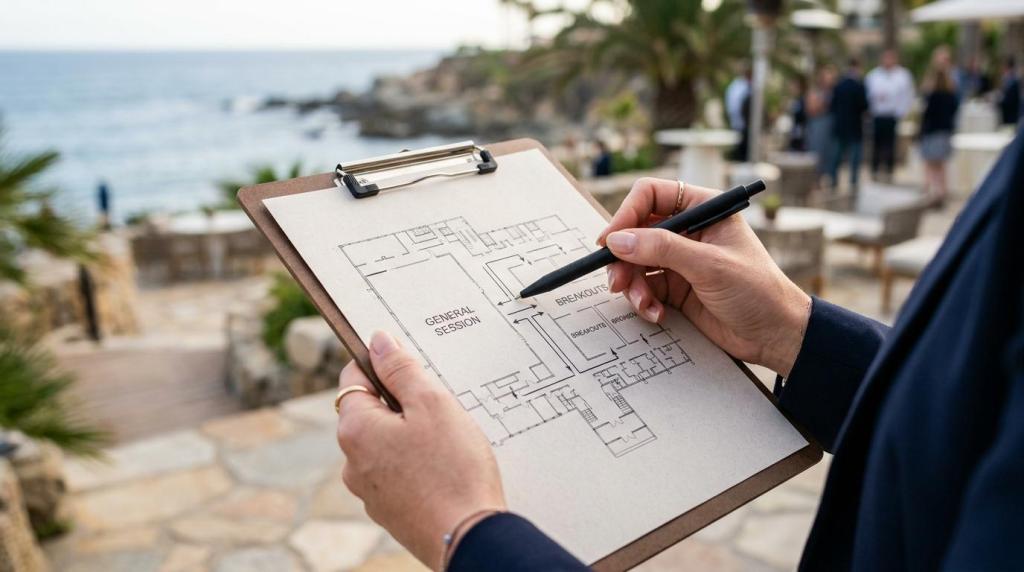
Step 2. Match the meeting footprint to the agenda, not just the attendee count. A common planning error is choosing a hotel because the ballroom looks impressive. The real test is whether the property supports the full sequence: general session, breakout rooms, VIP holding space, green room, hospitality suite, and weather backup. If your program has multiple content tracks, Fontainebleau or The Breakers may support that complexity better than a smaller resort.
Step 3. Stress-test the guest journey. Ask how attendees will move from rooms to breakfast to session space to leisure activities to the evening event. If the route feels disjointed on paper, it will feel worse live. For incentive travel, elegance often comes from efficient transitions more than decoration.
A practical tip: ask to see not only floorplans but also a sample movement plan for your exact program. That reveals far more than square footage alone.
How should you build a 3-day South Florida incentive itinerary?
The best 3-day program balances arrival ease, one focused business window, and two standout social moments.
Step 1. Keep day one light but polished. Guests arriving from multiple cities should not be pushed straight into heavy content. A refined welcome reception, room gifts with local character, and a short host message usually outperform a long formal dinner on arrival night.
Step 2. Put the business content on the middle day. Morning sessions tend to perform best when attention is highest. Then shift into choice-based experiences, spa, golf, poolside cabanas, wellness, or private excursions, before the signature evening event. That structure preserves the incentive feel while still giving leadership face time with the group.
“Experience Epic Events launched destination management services to better serve clients choosing South Florida as the backdrop for event excursions.”
One frequent misconception is that luxury means filling every hour. It does not. Premium incentive travel usually needs intentional breathing room. Top performers value autonomy, and executives notice when an agenda feels over-programmed.
Step 3. End with recognition and a clean departure. A farewell brunch, awards segment, or leadership fireside chat works well on the final morning. If the company wants post-event impact, record short testimonial interviews before departures while enthusiasm is still high.
What meeting-space numbers actually matter when comparing resorts?
Capacity, breakout mix, and outdoor backup matter more than headline square footage alone.
A large number can be reassuring, but it can also be misleading. For incentive travel, the right space mix often beats the biggest event center. The goal is to create flow, privacy, and staging flexibility without making the group feel swallowed by the property.
When reviewing resort proposals, focus on these measures:
- Ballroom-to-breakout ratio: A strong general session room loses value if the property cannot support adjacent breakout or green-room needs.
- Outdoor inventory with backup: Fontainebleau lists 9,000 square feet of outdoor space, which is useful only if the rain plan is equally viable.
- Format-specific capacity: PGA National cites nearly 1,200 attendees theater-style in one venue, but your banquet, classroom, or lounge setup may reduce usable capacity.
- Venue versatility: The Breakers positions its program around indoor and outdoor venues, which matters when a recognition dinner and strategy session need different atmospheres in the same stay.
A pro tip here is simple: ask how often a space is sold in the exact setup you need. Hotels know the difference between theoretical capacity and comfortable execution.
Is a single-resort program or a split-destination itinerary better in South Florida?
For most 3-night incentive trips, one resort is better. For longer stays or highly curated VIP programs, a split itinerary can add real value.
A single-resort program usually delivers the stronger executive result. It reduces transfers, preserves guest energy, simplifies security and baggage handling, and gives the host brand more control over signage, gifts, meeting timing, and service consistency. If your group is under 150 and the stay is short, this is usually the smarter choice.
A split-destination program can be powerful when each stop tells a distinct story. Miami Beach can open with energy and visibility, while Palm Beach can close with privacy and elevated recognition. That said, the additional movement only makes sense if the experience gain is obvious to the guest. If not, complexity becomes noise.
The key trade-off is simple. If the trip is meant to celebrate and reconnect, stay in one resort. If the trip is meant to impress a very select group with layered experiences over four or five nights, consider two stops.
How do weather, seasonality, and outdoor backup plans affect South Florida incentive travel?
They affect every premium program. In South Florida, outdoor beauty is a strength only when the backup plan is equally strong.
Luxury planners treat weather backup as part of the design, not a defensive afterthought. An oceanfront dinner, poolside reception, or rooftop after-party can be the emotional peak of the trip, but only if heat, wind, or rain do not force a rushed compromise.
That means building flexibility into the resort selection itself. The strongest properties offer both memorable outdoor settings and credible indoor alternatives. This is one reason resorts with deeper venue inventories often justify their premium positioning.
“Based in Lake Worth Beach, Experience Epic Events pairs South Florida destination insight with nationwide event production experience.”
Keep these variables in the planning file from day one:
- Early evening heat load
- Wind impact on audio and décor
- Indoor hold space
- Transportation timing during weather shifts
A practical rule: if the outdoor event is mission-critical, secure the indoor backup with the same seriousness as the primary venue. Waiting to “see how the forecast looks” is not a luxury move.
How should you handle contracts, risk management, and destination support?
Treat contracts, vendor terms, and on-site command as part of the experience strategy, not just legal cleanup.
Step 1. Clarify the commercial terms early. Room block commitments, attrition, cancellation windows, food and beverage minimums, resort charges, and vendor exclusivity can change the value of a property quickly. A lower room rate is not automatically the better deal if the operational terms are restrictive.
Step 2. Reconcile program design with risk. If the agenda depends on outdoor events, premium entertainment, custom builds, or multiple off-site movements, the planning team should pressure-test each dependency before signature. If this piece is skipped, the program may look excellent in a pitch deck and fragile in live execution.
Step 3. Define the on-site chain of command. Incentive travel becomes expensive when decisions stall in real time. The hotel, DMC, AV team, transportation lead, and corporate host should all know who approves changes, who owns guest communications, and who manages backup scenarios.
This is where local destination management support becomes commercially important. Experience Epic Events positions its South Florida work around destination management services, concept-through-execution planning, and a high-touch model that helps companies manage both experience quality and operational control. For executive teams, that often means fewer surprises and faster decisions when the schedule gets tight.

Leave a comment