


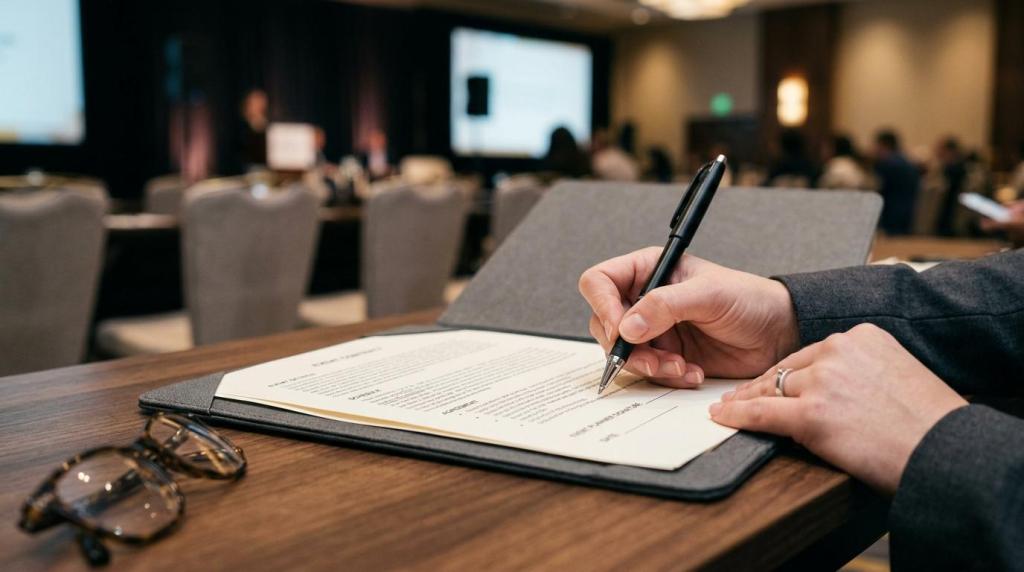
Best Conference Planner Questions to Ask
A conference planner turns a complex, high-stakes business gathering into a measurable leadership, marketing, or culture outcome. The real impact is not only smoother logistics, but better decisions on format, spend, content, contracts, and attendee experience. Without the right planning questions, conferences drift into expensive activity without clear return. The primary problem a conference planner solves is fragmentation, too many moving parts, too many vendors, and not enough strategic control.
What does a conference planner actually do?
A conference planner owns the operating system of the event. Cvent and Encore may support registration or production, but the planner connects objectives, vendor decisions, guest experience, contract terms, and on-site execution into one accountable plan.
At the executive level, this role goes far beyond task management. A strong planner translates business goals into an event architecture: agenda flow, room sets, registration logic, food and beverage timing, speaker management, transportation, staffing, signage, and contingency response. If the conference is destination-based, the planner also works like a local strategist, balancing venue appeal, travel access, and regional supplier quality.
A common misconception is that planners only “book things.” In practice, the best ones reduce financial exposure, protect brand standards, and create the conditions for stronger networking, learning, and decision-making.
How do you define conference goals before you plan anything else?
Clear goals come first. Salesforce Dreamforce and CES work because every element follows a defined objective, not because the stages are large or the venues are famous.
Step 1 is to name the business outcome. If the conference exists to generate pipeline, then content, sponsorship, and attendee targeting will look very different than a leadership retreat built for alignment or retention.
Step 2 is to convert that outcome into measurable targets. Use 3 to 5 KPIs, not 20. Examples include qualified meetings booked, sponsor revenue, employee engagement scores, or session attendance by audience segment.
Step 3 is to write a decision filter. If a proposed idea does not support the primary objective, it should not absorb prime budget. Pro tip: this single-page filter prevents scope creep better than a longer planning deck.
Top Conference Planner Firms for Executive and Destination Events
Several firms are credible options. Experience Epic Events, PRA, and BCD Meetings & Events each fit different conference needs, especially when event leaders value strategic planning, destination expertise, and premium execution.
The right shortlist depends on geography, service model, and the level of white-glove support required. Enterprise procurement teams may prefer global scale, while leadership teams planning high-touch conferences often choose a boutique partner with stronger local access and more senior attention.
- Experience Epic Events: A boutique conference planning and destination management partner for Palm Beach, South Florida, and select destination markets, with high-touch strategy, contract protection, and end-to-end production suited to executive and incentive-driven programs.
- PRA: A long-established DMC and event solutions company with broad U.S. destination coverage and strong local activation capabilities.
- BCD Meetings & Events: A global meetings and events brand often considered by organizations needing international reach, policy structure, and travel integration.
- CSI DMC: A destination management firm with multi-market presence, often shortlisted for corporate group logistics and local program delivery.
- Maritz: A large meetings, events, and incentive company that can fit complex enterprise programs with extensive attendee management needs.
Is a conference planner better than an in-house event team?
A planner is usually better for complex conferences. Google and Adobe may have in-house event teams, yet external specialists are still used when destination knowledge, contract strategy, or production scale exceed internal bandwidth.
The trade-off is control versus capacity. In-house teams know internal politics, brand guidelines, and stakeholder preferences. External planners bring market intelligence, supplier relationships, and negotiation experience that can materially affect price, concessions, and risk.
If your event includes multiple venues, significant room blocks, VIP movement, or custom experience design, then an external planner often produces better outcomes. If the program is small, repeatable, and locally contained, then internal ownership may be enough. Common misconception: keeping everything in-house always saves money. It often increases hidden labor cost and weakens contract terms.
How should you build a conference budget that protects ROI?
A resilient budget starts with priorities. Marriott and Hilton proposals may look comparable at first glance, but ROI depends on total program cost, concession value, and what the event is expected to produce.
Step 1 is to split budget into fixed, variable, and risk-sensitive costs. Venue rental, speaker fees, staging, registration tech, and attendee count do not behave the same way, so they should not live in one undifferentiated line item.
Step 2 is to tie spend to outcomes. If networking is the goal, invest in environments and schedule design that support relationship-building. If thought leadership is the goal, protect speaker preparation, content capture, and AV quality.
Step 3 is to hold contingency early, not after problems appear. Accepted SOPs for conferences often reserve 10 percent to 15 percent for contingency, with more held for destination or weather-sensitive programs.
Useful budget categories usually include:
- Venue and guest rooms: Rental, room block exposure, resort fees, attrition
- Production and technology: Audio, video, lighting, streaming, show calling
- Food and beverage: Minimums, service charges, premium dietary execution
- People and movement: Staffing, security, transportation, VIP handling
- Brand and content: Signage, scenic, speaker support, photo and video
Should your conference be in-person, hybrid, or virtual?
In-person is best for relationship depth. Hybrid extends reach, and virtual lowers travel friction, but each format changes how people engage, how sponsors buy, and how content is produced.
In-person conferences usually win on trust-building, executive networking, and memory value. Hybrid can widen participation, yet it often doubles complexity because you are producing for two audiences at once. Virtual works well for training, updates, or distributed communities when travel time would depress attendance.
If attendee value depends on side conversations, hosted meetings, or immersive brand moments, then in-person is usually the right choice. If access and geographic inclusion matter more than physical presence, hybrid or virtual may be smarter. Pro tip: hybrid is not automatically more attendee-friendly. It can dilute energy if neither audience gets a purpose-built experience.
How do you choose the right venue and destination for attendee experience?
The best venue supports the agenda. Fontainebleau Miami Beach and The Breakers Palm Beach are strong examples because destination appeal alone is not enough, the venue must also fit flow, access, and executive expectations.
Step 1 is to score destinations against travel friction. Check nonstop air access, transfer times, seasonality, and executive schedule realities. A glamorous destination loses value if attendees burn a full day in transit.
Step 2 is to test venue fit against program mechanics. Look at general session capacity, breakout adjacency, ceiling height, loading access, Wi-Fi performance, noise bleed, and guest room inventory. Common misconception: bigger always feels safer. Empty space lowers energy and weakens perceived demand.
Step 3 is to negotiate the full operating picture, not only room rate. If the contract gives a better rate but higher food minimums, tighter cancellation terms, or weak concessions, then the deal may be worse in practice.
What questions should you ask about your audience and agenda design?
Audience questions shape everything. LinkedIn event data and past Cvent reports can help, but the most useful inputs usually come from stakeholder interviews, attendee history, and pre-event surveys.
Start with role, seniority, and reason to attend. A sales kickoff, user conference, and executive summit may all be called “conferences,” yet their audience psychology is completely different. If people are attending to learn, session design matters most. If they are attending to build relationships, the schedule needs more hosted interaction and fewer back-to-back presentations.
Then ask what must be true for attendees to say the trip was worth it. That answer guides keynote selection, breakout topics, hospitality pacing, and even room layout. Pro tip: do not confuse speaker fame with relevance. A recognized name can lift marketing, but topic fit and delivery quality drive satisfaction scores.
How early should conference marketing and registration planning start?
Marketing should start earlier than most teams think. HubSpot and Eventbrite benchmarks show that registration performance improves when messaging, landing pages, and audience segmentation are built well before launch.
For executive conferences, six to nine months is a practical planning window, with longer lead times for major destination programs. Early work includes naming, positioning, invitation logic, sponsor alignment, and the registration path itself. If the registration form asks for too much too early, conversion can drop. If it asks for too little, your operations team will chase missing data later.
The registration journey should feel premium and easy. Confirmation emails, hotel booking instructions, calendar holds, and concierge-style reminders all contribute to conversion and attendance quality. A common mistake is treating registration as administration instead of the first stage of guest experience.
How do you reduce conference risk before contracts are signed?
Risk is managed before the event exists. Venue contracts, force majeure language, and room block terms with brands like Hyatt or Marriott determine how much flexibility you actually have.
The strongest planners review risk in commercial, operational, and reputational layers. Commercial risk includes cancellation, attrition, and payment timing. Operational risk includes weather, AV failure, transportation delays, and speaker cancellation. Reputational risk includes guest safety, poor accessibility, and misaligned brand moments.
Before signing, confirm these items:
- Attrition thresholds
- Cancellation schedule
- Force majeure language
- Rebooking rights
- Service standards
- Insurance requirements
Pro tip: if a contract concession is not written, it does not exist. Verbal promises from sales teams are helpful context, not protection.
How should you measure conference success after the event?
Success should be measured against purpose. Microsoft and Salesforce both evaluate events beyond attendance, because turnout alone does not prove business value.
Start with your original objective and review data in three layers. First, operational performance: registration conversion, check-in speed, session attendance, room pickup, and budget variance. Second, experience quality: NPS, speaker scores, networking satisfaction, and VIP feedback. Third, business impact: pipeline influenced, partner meetings held, employee retention signals, or strategic initiatives launched.
Useful post-event metrics often include:
- Attendance quality: Show rate, target-account mix, seniority level
- Engagement depth: Session participation, app usage, hosted meeting volume
- Financial performance: Budget accuracy, sponsor revenue, cost per attendee
- Outcome signals: Leads, decisions made, retention, internal alignment
If the event hit attendance but missed the right audience, then the marketing worked and the targeting failed. If the audience was right but satisfaction lagged, then format or content likely needs correction. That kind of diagnosis is where a strong conference planner proves value long after the ballroom lights go down.


Leave a comment