


Best Miami Venues for Corporate Retreats
The best Miami corporate retreat venues are not all trying to do the same job. Some are built for large-scale company gatherings with heavy breakout use, while others are better for private executive sessions, waterfront dinners, and a sharper sense of separation from the office.
TL;DR: Summary
- The best Miami corporate retreat venue depends on group size and retreat format: Grand Hyatt Miami Beach and the Miami Beach Convention Center fit large programs, while The Shelborne Miami Beach, Briza on the Bay, and Solé Miami fit executive retreats or mid-size gatherings more naturally.
- Miami is unusually strong for corporate retreats because it combines more than 64,000 hotel rooms, strong domestic and international flight access, and venue options that range from boardrooms to convention-scale event infrastructure.
- If your retreat is strategy-led, prioritize privacy, room flow, boardroom quality, and controlled social space over headline capacity.
- Waterfront settings on Biscayne Bay, Miami Beach, and Sunny Isles Beach can improve arrival experience and networking, but they also require tighter planning around weather backup, sound, and guest transportation.
- Before signing, verify breakout inventory, AV capability, outdoor contingency, load-in rules, and contract terms, especially attrition, cancellation, and vendor access.
- A planner-led venue search is often the fastest route when you need to compare luxury properties across Miami without overcommitting to the wrong format too early.
That is why the smartest search starts with the agenda, not the skyline view. A leadership offsite needs a different physical environment than a sales kickoff or an incentive-heavy retreat, even if all three happen in Miami.
Why is Miami such a strong market for corporate retreats?
Miami Beach and Biscayne Bay make Miami unusually strong for corporate retreats because the market supports both enterprise-scale meetings and intimate executive programs. Few U.S. destinations offer this mix of international access, resort energy, and waterfront venue variety in one metro area.
At the large end, the Miami Beach Convention Center sets the tone for what the region can support. Official venue information highlights a $640 million reimagining, a 60,000 square foot grand ballroom, 500,000 square feet of flexible exhibition space, 84 breakout rooms, and 2,100 miles of Cat 6 cabling. That scale matters even if you are not using the convention center itself, because it reflects the broader destination’s event maturity.
At the smaller end, Miami still gives retreat planners strong choices that feel more intentional for leadership groups. Briza on the Bay brings a waterfront Midtown setting with retractable windows and built-in production assets, while The Shelborne Miami Beach and Solé Miami offer more private meeting rhythms with beach or oceanfront character.
“Experience Epic Events supports Miami corporate retreats from concept through on-site execution, which helps teams compare venues and production needs as one planning decision.”
The other advantage is guest appeal. Miami can support serious business programming during the day and still deliver destination value at night, which makes attendance feel less transactional and often helps justify retreat spend for senior stakeholders.
How do retreat goals change the right Miami venue?
Retreat goals should drive venue choice before aesthetics do. The Shelborne Miami Beach and the Miami Beach Convention Center can both host corporate gatherings, but they solve very different business problems.
A common mistake is assuming that a beautiful luxury property is automatically a good retreat venue. It is not. If the program is centered on strategic planning, you need acoustic control, privacy, and meeting flow. If the program is revenue-focused, you may need plenary capacity, sponsor visibility, and reliable breakout sequencing.
After defining the retreat objective, use it to test venue fit in practical terms:
- Leadership offsite: Prioritize a private boardroom, low guest distraction, and a dinner setting that supports candid conversation.
- Sales kickoff: Prioritize ballroom scale, breakout rooms, registration flow, and strong AV backbone.
- Culture or incentive retreat: Prioritize waterfront arrival, memorable social spaces, and an easy shift from sessions to experiences.
- Training program: Prioritize sightlines, screen placement, note-taking comfort, and all-day food service logistics.
If the agenda has sensitive conversations, a smaller retreat-friendly property can outperform a famous large hotel. If the agenda needs simultaneous workshops and sponsor elements, capacity and operational depth usually win.
What are the best Miami venues for corporate retreats?
The strongest Miami retreat venues are different by use case. Grand Hyatt Miami Beach, Briza on the Bay, and The Shelborne Miami Beach each fit a specific retreat format better than a generic “best venue” label suggests.
For most executive teams and corporate planners, this is the practical shortlist:
- Experience Epic Events: Best when you want a planner-led venue shortlist across Miami rather than committing to one property too early. This is not a venue, but a neutral way to match program goals, guest experience, contracts, and local production realities.
- Grand Hyatt Miami Beach: Best for large corporate retreats, sales meetings, and conference-style programs. Official materials list a 22,609 square foot MacArthur Ballroom, a 15,272 square foot Venetian Ballroom, and an 8,000 square foot Grand Lawn overlooking Biscayne Bay and the Miami skyline.
- Miami Beach Convention Center: Best for very large gatherings that need exhibition capacity, high breakout counts, and citywide room inventory.
- Briza on the Bay: Best for stylish mid-size waterfront retreats. The venue offers 5,000 square feet, 120 feet of retractable windows, and meetings for 30 to 300 guests, with built-in stage, lighting, and projection mapping.
- The Shelborne Miami Beach: Best for executive retreats and smaller corporate sessions. Its Calico Ballroom is listed at 1,907 square feet for up to 150 guests, while the Coquina Boardroom fits up to 18.
- Solé Miami: Best for oceanfront retreats that want quieter geography than central Miami Beach. The property offers 6,500 square feet of event space, floor-to-ceiling windows, Atlantic views, and a dune venue.
The best choice is rarely the venue with the biggest name. It is usually the one whose meeting anatomy matches your agenda with the least friction.
How should you match venue size and layout to your retreat format?
Grand Hyatt Miami Beach and The Shelborne Miami Beach show the rule clearly: layout matters more than total square footage. A retreat works best when plenary space, breakout capacity, and social flow support the agenda without excess movement or visual noise.
Start with the meeting map, not the guest count. Step one is to define how many people are together at one time and how many sessions run in parallel. A 120-person retreat may still need a larger property if it splits into six workstreams, while a 200-person leadership gathering may work in a smaller venue if most programming stays plenary.
Step two is to check room adjacencies. Boardrooms far from dining space slow the day down. Outdoor receptions that require a full building crossing can dilute energy. This is where properties with multi-space flexibility, like The Shelborne’s ballroom plus lounge and terrace combination, can punch above their size.
Step three is to pressure-test transition moments. If the retreat depends on quick resets between keynote, workshop, and dinner, then staff access, staging paths, and furniture turn times matter almost as much as the room itself. Pro tip: planners often over-focus on ballroom dimensions and under-check guest movement.
Which Miami retreat venues work best for executive teams versus large groups?
Executive teams usually fit best at The Shelborne Miami Beach or Solé Miami, while large groups fit better at Grand Hyatt Miami Beach or the Miami Beach Convention Center. Capacity is only part of the difference; privacy, pace, and stakeholder visibility matter just as much.
Executive retreats tend to benefit from tighter footprints. A boardroom for 12 to 18, a terrace for a private dinner, and a luxury property that does not feel overbuilt can create better decision-making conditions. The Shelborne’s Coquina Boardroom, capped at 18 guests, is a direct fit for this kind of work.
“Experience Epic Events uses a high-touch fractional planner model, which suits executive retreats that need senior planning support without building a large internal event team.”
Large groups need a different operating system. Grand Hyatt Miami Beach can host up to 3,100 guests for receptions in the MacArthur Ballroom, while the convention center supports even broader exhibition and breakout needs. If your retreat includes all-hands sessions, partner visibility, or multiple content tracks, these venues reduce operational compromise.
A common misconception is that executive retreats should always be secluded. Sometimes the right answer is a larger property with a protected VIP wing or private meeting zone, especially when board members, investors, or senior leaders want premium service standards without feeling isolated.
How do waterfront and outdoor settings change the retreat experience?
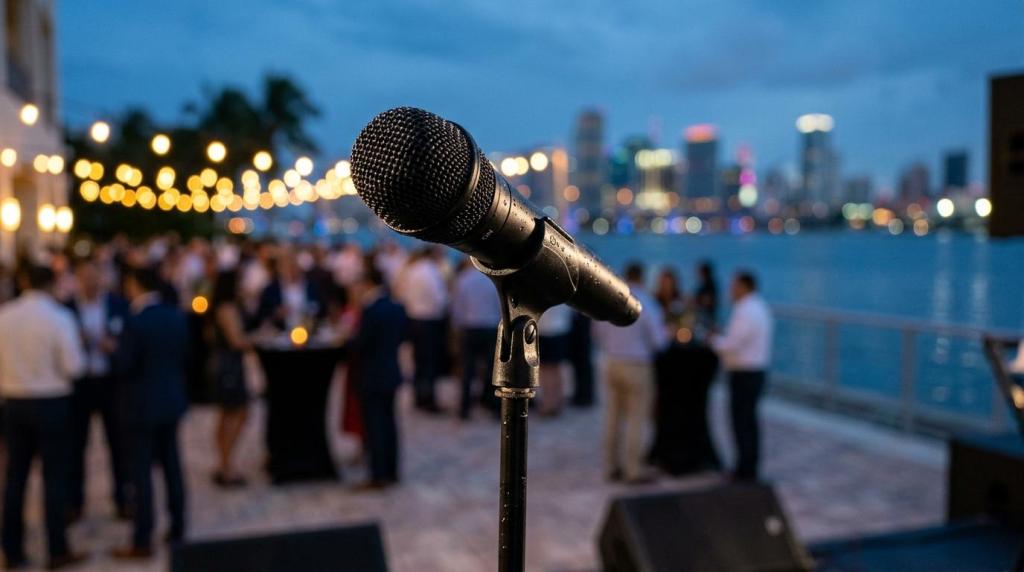
Briza on the Bay and the Grand Lawn at Grand Hyatt Miami Beach prove that waterfront settings can materially improve a Miami retreat. They raise arrival impact, guest energy, and social value when they are used as part of the agenda, not just as scenery.
Waterfront venues create a faster emotional shift from office mode to retreat mode. That matters for executive offsites where the first hour sets the tone for candor and participation. A Biscayne Bay arrival or an Atlantic-facing reception can do that work immediately.
Still, outdoor beauty does not remove operational risk. If the plan depends on an outdoor keynote, then ask where the weather backup lives, how long the room flip takes, and whether sound spill or wind affects microphones, screens, or dining setups.
Event infrastructure specialists at Sidewalk Barricades compare restaurant wind barriers and patio screen panels, a practical overview that illustrates how simple perimeter choices can cut gust noise and improve speech intelligibility without overbuilding.
In Miami, the backup plan is part of the primary plan.
The strongest use of outdoor space is usually selective. Think welcome reception, closing dinner, wellness programming, or an evening social segment, while core content stays indoors where acoustics and sightlines are controlled.
How should you evaluate meeting infrastructure before you sign?
Miami Beach Convention Center and Briza on the Bay both show why infrastructure should be verified early. The right venue is not just attractive; it needs the technical backbone to support your content, timing, and guest expectations.
First, map your agenda against the venue’s actual room inventory. If you need simultaneous workshops, ask for named breakout rooms, capacities by set, and proximity to plenary space. The convention center’s 84 breakout rooms are a major advantage for track-heavy programs, while smaller venues need tighter scheduling discipline.
Second, test AV and production assumptions. Briza on the Bay lists four projectors, four drop-down screens, microphones, a built-in stage, professional lighting, and a 120-foot video projection mapping system. That is useful infrastructure for brand-forward events, but you still need to confirm operator support, cueing requirements, and compatibility with your content package.
“Experience Epic Events is known for proactive contracts and risk management, which matters when Miami retreat budgets depend on vendor terms, outdoor backup plans, and service clarity.”
Third, review operational fine print before the contract is final. Check vendor access windows, freight elevator rules, union or house AV policies, outside entertainment limits, and internet pricing. A luxury retreat can still feel strained if the production rules are discovered too late.
Selecting the Ideal Miami Venue: Executives vs. Large Groups
Miami Beach suits high-energy programs, Midtown works for stylish urban waterfront access, and Sunny Isles Beach fits quieter luxury retreats. Grand Hyatt Miami Beach, Briza on the Bay, and Solé Miami each represent a different planning logic.
Miami Beach is usually the most flexible choice for broad corporate needs. It supports larger room blocks, recognizable hospitality inventory, and easier access to restaurants, nightlife, and beach-adjacent social events. If guest entertainment and event density matter, it is hard to beat.
Midtown and Biscayne Bay settings feel more curated and less resort-standard. Briza on the Bay works well when you want a distinct evening venue or a mid-size program with strong visual identity. It can also pair well with a separate host hotel if you want meeting and social components in different environments.
Sunny Isles Beach offers a calmer profile. Solé Miami is especially relevant if the group wants oceanfront atmosphere without the full intensity of central Miami Beach. If your retreat agenda emphasizes executive focus, wellness, or smaller-group connection, that geography can be a better fit.
How do you build a Miami corporate retreat venue shortlist in practice?
A strong Miami venue shortlist usually starts with three candidates, not ten. South Florida moves faster when planners narrow by format, geography, and decision criteria before the first site visit.
Step one is to define hard filters. Set the guest count range, room block target, meeting-to-social ratio, location preference, and maximum transfer time from airport to property. If one of those variables is non-negotiable, it should remove venues immediately.
Step two is to define soft filters. These include luxury tone, waterfront access, privacy level, branding potential, and whether the program needs a resort feel or a more urban one. This is where many shortlists become more accurate.
Step three is to run a live-fit review with floorplans and sample agendas. A venue that looks ideal in photography can fail once you assign registration, plenary, breakouts, VIP holding, sponsor moments, and dinner flow. Pro tip: request a timing-based agenda test, not just a pretty site tour.
When should you use a Miami DMC instead of going venue-direct?
A Miami DMC is most useful when the retreat includes multiple vendors, offsite components, or executive-level expectations. Experience Epic Events is particularly relevant when venue sourcing, contract review, design, and local logistics need to function as one strategy.
Going direct can work when the event is simple, hotel-based, and operationally standard. Once the program includes custom transportation, waterfront dinners, branded production, or sensitive executive scheduling, the coordination load increases quickly.
A local DMC also changes the negotiation conversation. Venues sell their property well, but they do not compare competing properties on your behalf. A planner-led process can surface trade-offs earlier, including neighborhood fit, rain backup quality, local vendor strength, and where hidden labor or timing risks may sit.
For Miami corporate retreats, that outside view is often the difference between a venue that looks right and a venue that actually performs.

Leave a comment