


Venue Sourcing Timeline for Corporate Meetings
Venue sourcing for corporate meetings now starts earlier, moves faster, and carries more financial impact than it did a few years ago. For executive retreats, leadership offsites, incentive programs, and brand-forward conferences, the venue is not just a backdrop. It shapes the guest experience, the budget model, the program flow, and the confidence of internal stakeholders who need to approve the investment.
Recent industry reporting points in the same direction. Costs are rising, hotel response times are stretching, and planners are placing more weight on hybrid capability, venue content assets, and spatial flexibility before they even send an RFP. That means the old habit of “we still have time” can quietly narrow options long before a planning team feels late.
Why the corporate meeting venue sourcing timeline is moving earlier
The strongest case for earlier sourcing is simple: premium venues are under pressure from several sides at once. GBTA reported that average cost per attendee at corporate meetings and events rose 4.5% in 2024, driven by labor, production, inflation, and higher expectations around wellness, sustainability, hybrid support, and experience-led programming. When each attendee carries more cost, every venue decision matters more.
At the same time, planner expectations are rising. Cvent’s 2026 Global Planner Sourcing Report found that 72% of planners expected event costs to rise and 35% said staying within budget was their biggest concern. That same report found attendee engagement was the primary KPI for 63% of planners. A venue now has to satisfy two demanding goals at once: fiscal discipline and a stronger in-person experience.
Response speed is also changing the timeline. Cvent’s Northstar/Cvent Meetings Industry PULSE Report noted that average hotel RFP response time increased from 4.84 days in March 2025 to 5.08 days in March 2026. That increase may look modest, though across multiple venues, review cycles, and internal approvals, it can push a sourcing process by weeks.
The practical answer is to begin earlier than many teams expect. Experience Epic’s own planning guidance recommends booking corporate events six to twelve months in advance, which gives organizations stronger venue options and a more realistic approval window.
A few signals should trigger an early venue search:
- premium dates moving first
- slower RFP reply cycles
- tighter executive approvals
- more hybrid and production requirements
- greater competition for non-hotel spaces
Recommended venue sourcing timeline by corporate meeting type
Not every meeting needs the same runway. A board dinner for twenty executives has a different sourcing path than a global incentive program or a leadership summit with live content, breakouts, and sponsor-facing elements. The right timeline depends on complexity, guest origin markets, exclusivity expectations, and how much design and production will be layered into the venue.
For premium corporate events, the schedule below is a strong planning framework.
| Meeting type | Recommended sourcing lead time | Why this timeline works |
|---|---|---|
| Executive retreat | 9 to 12 months | Gives access to top resort inventory, stronger suite blocks, and better privacy options |
| Leadership offsite | 6 to 9 months | Supports strategic date selection, F&B planning, and executive travel coordination |
| Annual sales meeting | 8 to 12 months | Useful for general session space, breakout flow, staging, and room block negotiation |
| Incentive travel program | 10 to 12 months | Needed for luxury inventory, destination experiences, and premium supplier alignment |
| Board meeting or investor program | 4 to 6 months | Often smaller in size, though privacy, security, and service standards still need time |
| Hybrid meeting or summit | 8 to 12 months | Allows proper review of bandwidth, streaming, camera positions, and technical staffing |
These ranges are not excessive. They reflect current market conditions, especially when the event is designed to feel polished, high-touch, and brand-right from arrival through departure.
What should happen in the first 30 days of venue sourcing
The first month sets the tone for everything that follows. When venue sourcing starts with vague assumptions, teams lose time comparing beautiful options that do not fit the business case, attendee profile, or production plan. When the first month is disciplined, the short list gets sharper, contract conversations become more strategic, and internal approvals move with less friction.
Before the RFP goes out, the meeting owner should be clear on a few points: why people need to gather in person, what success looks like, which stakeholders need sign-off, and what level of experience the audience expects. Cvent reported that 97% of planners saw time and cost savings from structured sourcing processes. That finding matters because structure does not remove creativity. It protects it.
A strong first 30 days usually includes the following work:
- Business case: Define the objective, the audience, and the top success metrics
- Attendee profile: Estimate room count, executive mix, arrival patterns, and VIP needs
- Program pattern: Map plenary sessions, breakouts, meals, receptions, and offsite moments
- Decision path: Confirm budget guardrails, legal review, and who can approve the shortlist
- RFP strategy: Decide whether to source one market, several markets, or a hotel and non-hotel mix
This phase is also where destination logic becomes sharper. A South Florida program may prioritize airlift, waterfront appeal, and post-session networking energy. A mountain retreat may prioritize privacy and mental reset. A European incentive may require a stronger cultural layer and more time for passport-driven travel planning.
Venue selection criteria that now shape RFP decisions
Venue sourcing used to begin with capacity, guest rooms, and rate. Those still matter, though they are no longer enough on their own. Planners are screening venues earlier, and the content a venue provides is affecting whether it even makes the RFP list.
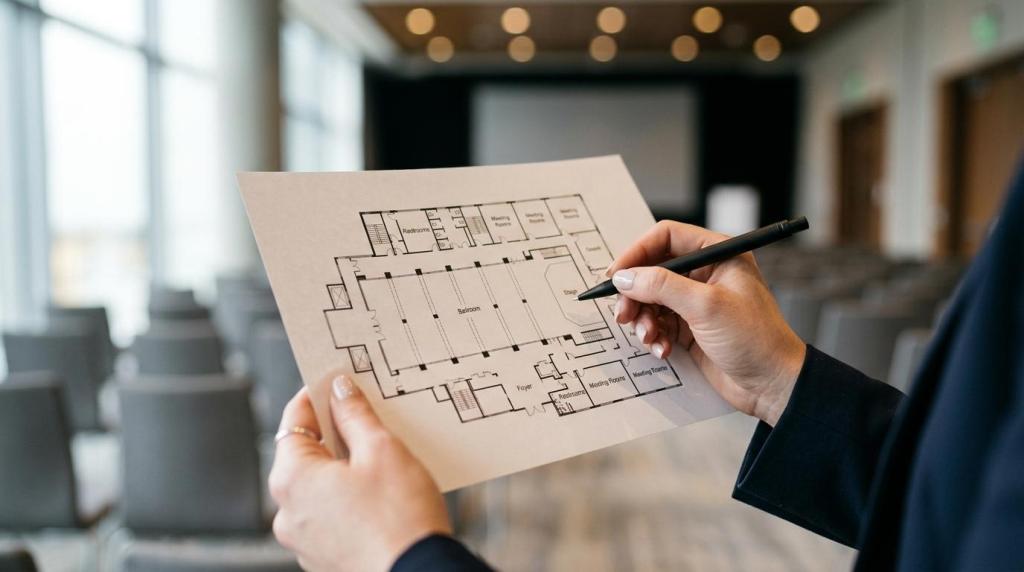
Cvent reported that meeting room specifications influence 50% of planners’ decisions to submit an RFP, images and video influence 49%, and floor plans and diagrams influence 46%. In other words, a venue that presents itself clearly has a real advantage. For high-level corporate meetings, that clarity is not cosmetic. It helps planners judge flow, branding opportunities, production feasibility, and attendee comfort without losing days in follow-up.
[PCMA reported that 79% of corporate meeting planners ranked hybrid meeting capability and technology among the most important factors when choosing a meeting venue. Even when the event is primarily in person, leadership teams often want the option to stream keynotes, record sessions, host remote speakers, or extend selected content to broader internal audiences.
This is also where non-hotel spaces keep gaining ground. Cvent found that 48% of planners were sourcing non-hotel spaces. That trend makes sense for companies that want more distinctive environments, stronger brand expression, or a less expected social setting. Think private estates, design-forward cultural venues, waterfront spaces, rooftop settings, or architecturally significant properties paired with a nearby host hotel.
When reviewing venues, experienced planners now weigh several layers at once:
- spatial quality
- technical readiness
- brand fit
- guest arrival experience
- privacy and exclusivity
- speed and quality of venue communication
How to protect the meeting budget during venue sourcing
Budget pressure does not mean settling for a lesser experience. It means sourcing with more precision.
Cvent reported that 84% of planners with flat or lower budgets said cost pressures were forcing them to find more cost-effective destinations and venues. That does not always mean a cheaper city. Sometimes it means choosing dates with better leverage, selecting a venue where the room setup reduces staging spend, or moving a reception on-property to avoid transportation and overtime labor.
The venue itself can either create savings or quietly add layers of cost. A ballroom with poor ceiling height may require a different stage design. A property with strict AV exclusivity may alter the production budget. A resort that looks ideal for leadership content may have room categories that create friction for executive equity. A beautiful offsite space may require extensive build, power distribution, restrooms, or weather contingency. Danish rental provider Telttilfest’s season calendar for tent and equipment bookings shows how peak months compress availability for essentials like power, lighting, heating and restroom trailers, which can meaningfully shift feasibility and price if decisions come late.
Smart sourcing reviews both the buy and the operating model. That means looking beyond rate and rental to the full event economics.
A disciplined sourcing team will usually pressure-test these budget variables before moving to contract:
- Date flexibility: Shoulder dates can change the value equation significantly
- Concessions: Meeting space rental, suite upgrades, attrition terms, and comp ratios all matter
- Production exposure: Built-in screens, rigging points, sound restrictions, and power access affect spend
- Service pattern: Staffing minimums, overtime rules, and vendor access windows influence the final bill
- Destination efficiency: Airlift, transfer time, and local supplier depth shape the total attendee cost
This is one reason structured sourcing continues to outperform reactive sourcing. When teams compare venues against the same weighted criteria, it becomes easier to defend the choice internally and negotiate from a position of facts rather than urgency.
Why venue sourcing is also a risk management decision
Luxury corporate meetings are high-visibility investments. The venue contract should reflect that reality.
Risk starts long before doors open. It begins with cancellation language, attrition exposure, force majeure protections, deposit schedules, insurance requirements, and the operational details that sit behind the guest-facing experience. An executive team may remember the keynote and the dinner, though a planner also remembers loading restrictions, union rules, late-night breakdown costs, and whether the backup weather plan was truly viable.
A venue should also be screened for resilience. Can it support a last-minute rooming change? Can it absorb a revised breakout pattern? Can it accommodate wellness programming, privacy for leadership sessions, or secure spaces for confidential discussions? These issues become even more important when the audience includes senior leadership, top clients, channel partners, or global teams.
The value of an experienced destination management and planning partner shows up here. Strong venue sourcing is not only about finding the right aesthetic or rate. It is about protecting the client from weak assumptions, one-sided terms, and operational surprises that surface too late.
How Venue Selection Drives Engagement and Executive Experience
The venue timeline matters because the guest experience matters. Cvent’s global planner research found attendee engagement was the top KPI for 63% of planners, and 66% of planners in the PULSE Report said face-to-face meetings are more valuable than they were before the pandemic. That is a strong statement about the role of place.
When venue sourcing begins early, organizations have room to choose settings that support real connection. That may mean natural light in general sessions, terraces that extend conversation after content ends, arrival moments that feel gracious rather than transactional, or private dining spaces that let leadership host with confidence. It may also mean selecting a venue with stronger content assets, so internal stakeholders can visualize the experience and approve it faster.
The best venue decisions do not feel like a compromise between practicality and impact. They feel intentional, commercially sound, and visibly premium from the first invitation to the last departure.
That is the real timeline advantage: more options, better terms, and a meeting environment that earns the trip.


Leave a comment