



What a Conference Organizer Handles On-Site
A conference can look polished, calm, and perfectly timed from the guest perspective while a dense layer of operational work is happening just out of view. That is the real value of a strong conference organizer on-site. The role is not limited to greeting vendors or checking room setups. It is a live command function that protects the guest experience, the executive agenda, and the investment behind the event.
For corporate conferences, leadership meetings, incentive programs, and executive gatherings, on-site execution is where planning is tested. Timelines compress. Small issues appear without warning. Priorities shift in real time. A capable organizer keeps the event moving with discipline, confidence, and a clear decision structure.
Meeting-management standards reflect that reality. Site management is treated as a distinct professional domain, covering setup, operation, communication, adaptation, and takedown. In practice, that means the conference organizer is responsible for much more than logistics. They are managing momentum.
On-site conference setup and pre-opening operations
Long before the first attendee checks in, the conference organizer is already directing a sequence of dependencies that must land in the right order. Load-in windows, registration build, signage placement, stage installation, audio checks, catering prep, speaker readiness, and staffing briefings all need active oversight. At an executive level, these are not isolated tasks. They are interlocking systems.
A polished opening depends on timing at the minute level. If staging is ready but power drops are delayed, screens stay dark. If registration is beautiful but badge sort is off, arrival feels disorganized. If the breakout rooms look perfect but the moderators have not been briefed, the content delivery suffers. The organizer is watching these handoffs constantly.
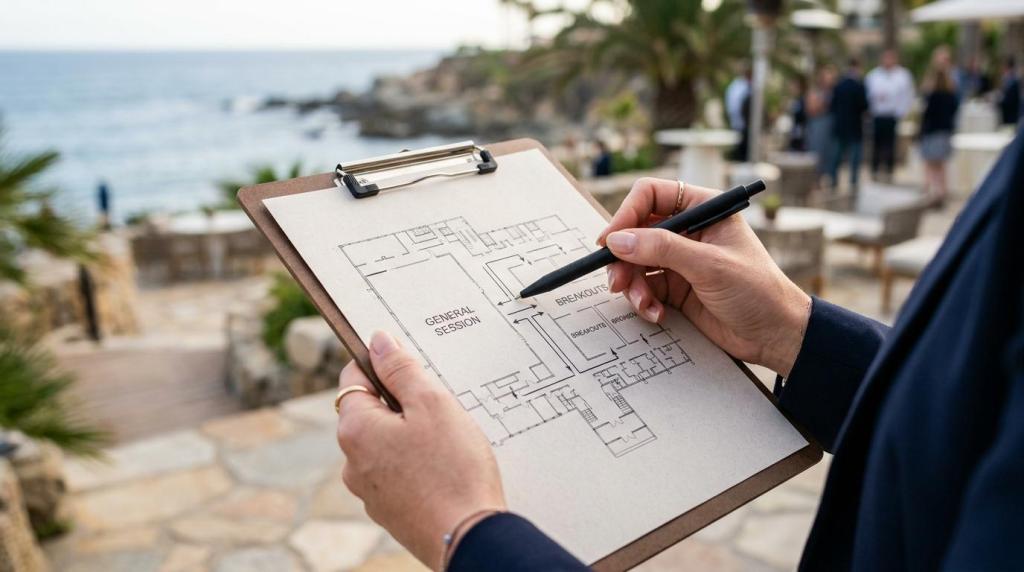
That early on-site period is also where the paper plan becomes a physical environment. Diagrams turn into room sets. Schedules become traffic patterns. Vendor scopes become visible performance. A luxury conference experience begins here, in the details guests may never consciously notice but always feel.
Typical setup oversight includes:
- Ballroom staging
- Registration counters and badge flow
- Wayfinding and branded signage
- Speaker green rooms
- Food and beverage timing
- Breakout room readiness
- Back-of-house staffing positions
When this work is handled well, arrival feels effortless, even though it was built through disciplined coordination.
Vendor coordination and venue leadership during conference operations
Once the venue activates, the conference organizer becomes the central point of contact for a broad supplier network. AV teams, florals, fabricators, transportation providers, catering managers, photographers, entertainment, security, venue operations, and labor crews all need direction that stays consistent with the event strategy. Without a single operational lead, mixed signals spread fast.
This is especially true in premium conferences where guest expectations are high and brand standards are exacting. A room reset cannot drift ten minutes late because catering was not cued. A keynote cannot start with the wrong walk-on music because the show caller and the AV lead were working from different versions of the agenda. The organizer keeps one source of truth in motion.
Vendor management on-site also requires judgment. Not every issue should be escalated to the client. Not every request should be approved on the spot. A seasoned organizer filters noise, resolves routine challenges directly, and raises only the decisions that genuinely require executive input.
A live vendor ecosystem usually needs coordination across areas like these:
- AV partner: tests microphones, playback, presentation flow, lighting cues, recording, and confidence monitors
- Venue operations: confirms access points, housekeeping cadence, power, dock timing, service corridors, and security procedures
- Catering team: syncs meal service with agenda timing, dietary handling, VIP hospitality, and replenishment standards
- Transportation lead: manages airport transfers, shuttle loops, executive arrivals, route shifts, and late manifest changes
At a high level, this is less about checking boxes and more about maintaining command presence. The best organizers create calm because every vendor knows where to turn, what matters most, and how decisions will be made.
Schedule control and run-of-show management for conferences
A conference schedule is a living system. It may be designed months in advance, yet on-site it changes hour by hour. Speakers run over. Executives request private meetings. Weather affects arrivals. Audience energy shifts. A room that seemed ideal on paper may need a new seating pattern once attendance is visible. The conference organizer is the person translating those live conditions into controlled action.
That is why run-of-show documents matter so much. These documents do far more than list start times. They define ownership, cue points, contingencies, transitions, and escalation paths. They tell the on-site team what happens, who moves it forward, and what backup plan activates if the original plan breaks. In a premium environment, a strong run-of-show protects both operational performance and brand polish.
The organizer also acts as the keeper of pace. Starting one session six minutes late can affect catering, breakout rotations, transportation departures, and evening programming. A disciplined organizer makes micro-adjustments early so the larger schedule stays intact.
Here is a simple view of what schedule control often looks like on-site:
| Conference area | What the organizer monitors | Why it matters |
|---|---|---|
| General session | Speaker readiness, stage cues, audience seating, timing drift | Protects keynote impact and keeps the wider agenda on track |
| Breakouts | Room turns, moderator arrival, handout placement, attendance flow | Maintains consistency across multiple concurrent experiences |
| Meals and networking | Service release, dietary requests, VIP hosting, turnover windows | Keeps hospitality polished without slowing the program |
| Transportation | Shuttle dispatch, executive transfer timing, venue access | Prevents guest frustration and protects attendance |
| Evening events | Lighting cues, entertainment timing, guest movement, weather plan | Preserves atmosphere and reduces last-minute disruption |
A sophisticated conference often succeeds because someone is managing time as actively as space.
Risk management and real-time issue response on-site
Every serious conference organizer works with risk management in mind. That includes formal safety planning, but it also includes the operational problems that can compromise the event if left unmanaged. Official meeting-management standards include emergency communication, site adaptation, and real-time operational response for good reason. Live events are dynamic environments.
Some risks are obvious. Severe weather, medical incidents, power loss, transportation disruption, or venue access problems need fast action. Others are more subtle but still expensive. A keynote deck loads in the wrong format. A sponsor activation exceeds footprint. A shipment arrives incomplete. A VIP dietary note is missing. A session fills beyond seating capacity. These are not rare scenarios. They are normal pressures in live production.
The difference between a minor issue and a visible failure is usually response speed, chain of command, and preparation. This is where backup plans and escalation paths move from theory to practice. If the organizer has already identified decision-makers, alternate spaces, replacement equipment, staff runners, and communication scripts, the event can absorb disruption without losing composure.
Common real-time responses include:
- Weather shift: move an outdoor reception indoors while preserving guest flow and service timing
- Speaker delay: reorder the agenda, update holding slides, brief moderators, and reset backstage timing
- Tech failure: deploy backup hardware, reroute audio, shift to local playback, or activate alternate internet
- Medical issue: connect venue security, local emergency services, and internal communication contacts quickly
- Overflow attendance: open auxiliary seating, extend screens, or redirect guests without creating confusion
In premium conference environments, risk management is not dramatic. It is disciplined, discreet, and fast.
Attendee experience management and executive support on-site
Operational leadership is not only about infrastructure. It is also about how the event feels. A conference organizer is often the invisible force behind a guest experience that appears intuitive, warm, and highly personalized. Registration should feel welcoming, not transactional. Breaks should feel intentional, not accidental. VIP movement should feel private and protected.
For executive audiences, this matters even more. Senior leaders need space to focus on content, relationships, and decision-making. They should not be fielding venue questions, checking transport timing, or chasing presentation updates. A strong organizer shields them from operational noise so they can stay present where their attention has the highest value.
This is where hospitality and logistics meet. A refined event experience depends on both. The lighting can be beautiful, the culinary program can be memorable, and the environment can feel globally polished, but if guests cannot find their breakout room or a board member waits fifteen minutes for a car, the premium standard weakens.
That is why on-site staffing plans often include guest-facing roles as carefully as technical ones. The front-of-house team should know who the VIPs are, where the friction points may appear, and how to respond with polish.
Site communication and on-site team leadership
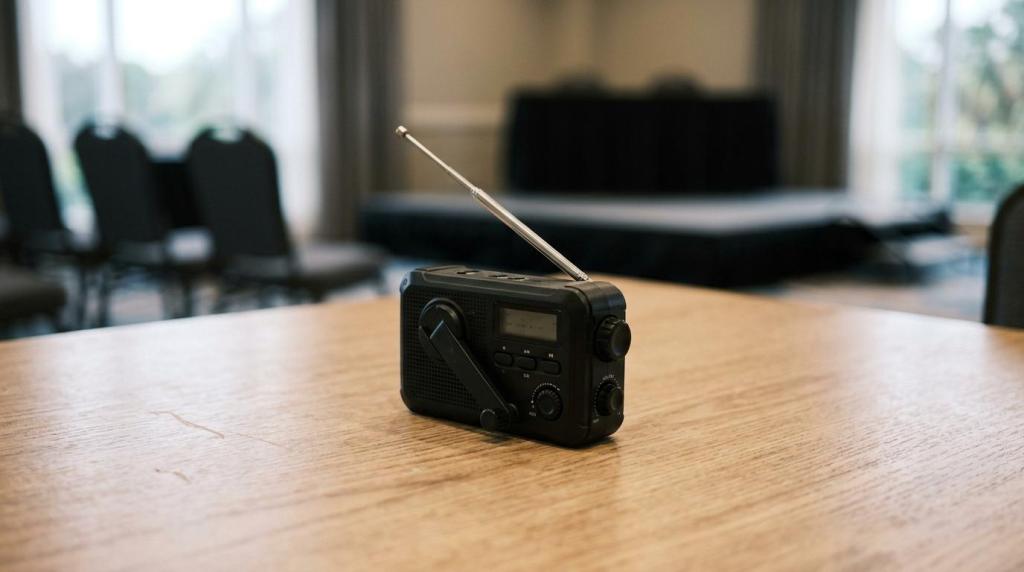
No conference runs well without a communication rhythm. Radios, text threads, staffing briefings, printed schedules, and command touchpoints all matter, but they only work if the organizer establishes clear communication rules. Who approves a room change? Who informs the venue? Who updates signage? Who alerts transportation? Who notifies the client contact?
When teams lack that clarity, they duplicate work or miss the issue altogether. When communication is strong, the event feels controlled even during active change. That control is especially valuable in multi-day conferences with general sessions, off-site dinners, VIP meetings, and sponsor activity happening at once.
Experienced organizers often use a structured communication model on-site:
- Command lead: owns live decision-making and client-facing escalation
- Show flow lead: tracks run-of-show timing, speaker movements, and technical cues
- Guest experience lead: manages registration, hospitality, VIP handling, and attendee concerns
- Logistics lead: covers transportation, deliveries, room turns, storage, and back-of-house movement
This kind of structure is one reason boutique, high-touch event teams can perform so well. Roles are clear, communication stays lean, and response times stay short.
Event takedown, post-program control, and operational closeout
A conference organizer’s on-site responsibility does not end when the last applause fades. Takedown is its own operational phase, and it carries financial, logistical, and reputational weight. Rentals must be collected correctly. Branded materials must be packed or disposed of according to plan. Shipments need labels and confirmed destinations. Venue strike rules need to be followed. Vendor sign-outs need to be checked. Final guest departures need to be clean and secure.
There is also the matter of documentation. On-site notes from the organizer often shape the post-event review, billing reconciliation, and future planning strategy. If catering overperformed in one space and underperformed in another, that should be logged. If a shuttle route created friction, it should be noted. If a ballroom configuration improved networking flow, that becomes useful intelligence for the next program.
For companies hosting conferences in Palm Beach, Miami, Fort Lauderdale, or destination markets abroad, that discipline has real value. It helps protect budget accuracy, improves future negotiations, and strengthens the quality of the next event. The visible conference may last two days. The organizer’s on-site operational impact often carries forward much longer.
Leave a comment