


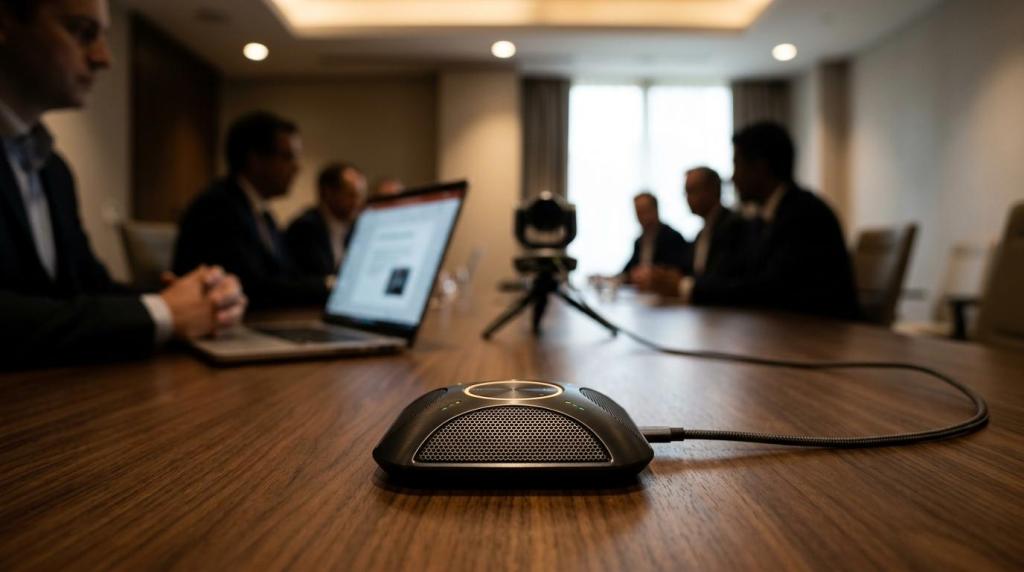
Meeting Management vs Meeting Planning
Executives often use meeting management and meeting planning as if they mean the same thing.
They do not.
That distinction matters more now because meetings are under pressure to deliver sharper decisions, stronger attendance value, polished guest experience, and tighter financial discipline all at once. A leadership session in Palm Beach, a hybrid sales summit in Miami, or an incentive-linked board meeting in Europe may share a calendar label, but each one requires a different mix of governance, production, hospitality, and decision design.
Meeting management vs meeting planning: the core difference
Meeting management is about how a meeting functions.
Meeting planning is about how a meeting happens.
That sounds simple, yet many organizations blur the line. A leader may say, “We need help with meeting management,” when the real need is venue sourcing, transportation manifests, rooming lists, catering oversight, speaker flow, production, registration, and on-site support. In another case, a company may invest heavily in event logistics while ignoring agenda structure, decision rights, attendee selection, and follow-through.
The most effective programs treat both disciplines as essential, but distinct.
| Area | Meeting Management | Meeting Planning |
|---|---|---|
| Primary focus | Structure, cadence, agenda flow, decision quality | Logistics, sourcing, production, hospitality, execution |
| Main question | Are the right people making the right decisions in the right format? | Is every operational and guest-facing detail ready and aligned? |
| Typical owner | Executive lead, chief of staff, internal operations, strategic facilitator | Event planner, DMC, producer, meeting team |
| Success metric | Better outcomes, faster decisions, clearer accountability | Smooth experience, budget control, operational precision |
| Common deliverables | Agenda design, role clarity, decision framework, meeting norms | Venue contracts, vendor management, run of show, travel and room blocks |
| Risk if ignored | Meetings drift, decisions stall, accountability weakens | Costs rise, experience slips, execution gaps appear |
For senior teams, the strongest results come when meeting management shapes the purpose and planning translates that purpose into a refined live experience.
Why meeting management affects decision quality
A beautifully staged meeting can still fail if the room is not set up for sound decision-making.
McKinsey has pointed to a persistent issue in executive environments: ineffective meetings slow decisions and weaken decision quality. In one survey, 61% of executives said at least half of the time they spent making decisions was ineffective, and only 37% said their organizations’ decisions were both timely and high quality. That is a performance issue, not a calendar issue.
Meeting management addresses that gap by focusing on the mechanics of productive interaction:
- attendee mix
- agenda sequence
- timing discipline
- pre-read quality
- decision ownership
- follow-up cadence
McKinsey also notes that five to seven attendees is often the sweet spot for decision-making meetings. That does not mean every executive gathering should be small. It means the core decision room should usually be tighter than the broader audience around it. A leadership offsite may host 40 participants, while the actual decision session inside that program should still be designed with discipline.
When organizations skip this layer, they tend to mistake activity for progress. The agenda looks full. The venue is impressive. The dinner is excellent. Yet the meeting ends with unresolved choices, blurred ownership, and no measurable momentum.
What meeting planning actually includes
Meeting planning covers the full operational architecture behind the experience.
For executive meetings, board sessions, incentive-linked leadership retreats, and high-value internal gatherings, planning extends far beyond scheduling a conference room. It includes supplier strategy, destination fit, contract support, food and beverage design, room layout, production timing, transportation, branded environment, attendee communications, and on-site issue management.
At a luxury and international level, planning also has to protect reputation. Senior audiences expect fluid arrival experiences, polished service, privacy, technical confidence, and a sense that every detail has been anticipated.
In practice, planning often includes the following:
- Venue sourcing: Matching the meeting’s purpose, geography, privacy needs, technical demands, and guest profile
- Vendor coordination: Managing catering, audiovisual, décor, entertainment, gifting, transportation, security, and specialty services
- Budget stewardship: Tracking spend against priorities while preserving guest experience and strategic impact
- On-site execution: Running timelines, managing stakeholder communication, and solving issues without visible friction
This is why experienced planning teams do not treat executive meetings as stand-alone scheduling tasks. Firms operating at a full-service level, including Experience Epic Events, position executive meetings as concept-through-execution programs, combining strategy, sourcing, logistics, production, budgeting support, and on-site delivery.
That broader scope is especially important when the meeting sits inside a larger business objective, like leadership alignment, investor confidence, culture renewal, sales acceleration, or market expansion.
Why venue decisions now require more than aesthetics
A striking property is not enough.
Venue selection used to be framed around brand fit, room count, and service level. Those factors still matter, especially in premium settings, but decision-makers now face a more layered checklist. According to PCMA research, 79% of corporate meeting planners cited hybrid meeting capability and technology among the most important venue factors.
That single data point says a lot. Even when a meeting is primarily in person, the venue may still need to support remote executives, live-streamed content, digital polling, confidential virtual attendance, or high-stakes presentation environments with no room for technical instability.
A sophisticated venue review now weighs:
- Hybrid meeting capability: Camera placement, bandwidth strength, platform readiness, sound quality, and technical staffing
- Executive experience: Arrival sequence, privacy, suite options, service standards, and premium breakout environments
- Program flexibility: Space flow for plenary sessions, workshops, networking receptions, and private dining
- Commercial value: Contract terms, attrition risk, cancellation language, concessions, and production limitations
For South Florida meetings in particular, venue selection can influence far more than ambiance. It shapes airport access, transfer complexity, weather contingencies, off-site dining possibilities, waterfront logistics, VIP movement, and the balance between business intensity and destination appeal.
Rising meeting costs make planning discipline more valuable
Meeting planning has become more financially demanding, not less.
GBTA reported that the average cost per attendee at corporate meetings and events climbed 4.5% in 2024. The drivers included rising labor and production costs, inflationary pressure, and a shift toward smaller, more curated, experience-led events.
That final point is especially relevant for premium corporate programs. Many companies no longer want generic volume. They want sharper guest lists, more intentional environments, better food, stronger production, and memorable touchpoints that justify time away from the business. That often raises per-person spend, even when the total attendee count is lower.
In this climate, strong planning is not about cutting corners. It is about making discerning choices.
A high-performing planning team helps clients protect value in several ways:
- Program design: Choosing the right format for the objective instead of defaulting to legacy meeting models
- Supplier strategy: Negotiating with preferred partners, managing scope early, and reducing costly late-stage changes
- Experience prioritization: Spending where guests and stakeholders will feel the difference
- Risk control: Building contingency plans that prevent expensive disruption
This is where boutique destination management and high-touch planning models can be especially effective. When planning, production, local supplier knowledge, and contract awareness sit under one strategic umbrella, the program is usually better protected from cost creep and last-minute friction.
Where companies most often confuse the two
The confusion usually shows up in one of three ways.
First, teams assume an internal organizer can “manage the meeting” because they can coordinate diaries and circulate notes. That may cover scheduling, but it does not address decision design or full-scale logistics.
Second, leadership groups invest in luxury planning but leave the content architecture weak. They secure the resort, dinner venues, branded materials, and speaker hospitality, yet the core sessions still run long, mix too many topics, and end without clear decisions.
Third, companies ask planners to solve strategic issues that belong to meeting management. A planner can build a flawless run of show, but they should not be expected to decide which seven people belong in a decision room or how authority should be distributed across agenda items.
A simple way to think about it is this:
- Meeting management makes the room effective.
- Meeting planning makes the program executable.
- Premium event leadership makes both work together.
Executive meetings need both disciplines working in tandem
This is most visible in leadership retreats, board meetings, annual planning sessions, and investor-adjacent gatherings.
These are rarely ordinary meetings. They often combine confidential business discussions, stakeholder hospitality, premium travel expectations, and carefully controlled timing. The experience has to feel polished, but the business purpose cannot get buried under production.
A strong executive meeting model often includes two parallel workstreams:
- A management workstream that defines outcomes, agenda rhythm, attendee roles, pre-read expectations, and decision moments.
- A planning workstream that secures venue, guest logistics, production, room sets, food and beverage, transportation, gifting, and on-site control.
When those workstreams are separated too far, performance slips. If they are merged intelligently, the meeting feels both effortless and commercially disciplined.
For high-level gatherings, that often means shorter decision blocks, better-designed transitions, intentional networking windows, and hospitality elements that reinforce the business objective rather than distract from it.
How to tell what kind of support you actually need
Before engaging outside support, it helps to ask a sharper question than “Do we need a planner?”
Ask what problem needs solving.
If the issue is wasted time, circular discussion, poor meeting cadence, and weak accountability, the primary need is meeting management. If the issue is destination selection, hotel contracting, transportation plans, hybrid production, catering oversight, and guest experience, the need is meeting planning. If the answer is “both,” that is usually a sign the meeting is important enough to warrant full-scope support.
A useful assessment might look like this:
- Need meeting management when: The agenda feels crowded, decisions stall, the attendee list is too broad, or leaders leave without next-step clarity
- Need meeting planning when: The program includes travel, venue sourcing, guest hospitality, vendors, budget pressure, or technical production
- Need integrated support when: The meeting involves senior stakeholders, multiple locations, brand visibility, or a material business outcome
That integrated model is often the right fit for executive retreats and destination meetings in places like Palm Beach, Fort Lauderdale, and Miami, where guest expectations are high and the destination itself becomes part of the experience.
A modern meeting strategy is wider than the meeting itself
Corporate gatherings now sit at the intersection of strategy, experience, technology, and cost control.
That is why the language matters. Meeting management and meeting planning are connected, but they are not interchangeable. One sharpens the thinking inside the room. The other builds the environment, operations, and execution that allow the room to perform.
When companies recognize that distinction, they make better choices about ownership, budget, format, and partner support.
And when both are handled at a high level, meetings stop being obligations on the calendar and start becoming decisive business instruments.


Leave a comment