


Top Incentive Trip Ideas for Sales Teams
Incentive trips are performance rewards designed to turn sales goals into visible, aspirational wins. They solve a common leadership problem: cash bonuses are quickly absorbed into everyday life, while a well-built travel experience creates anticipation before the trip, recognition during it, and stronger loyalty after it. For sales teams, that mix can lift effort, sharpen focus, and make top performance feel prestigious rather than purely transactional. The best programs do more than reward winners. They also signal what the company values and who gets access to the inner circle.
Why do incentive trips often outperform cash bonuses for sales teams?
Yes. IRF and SITE research consistently show travel rewards beat cash when the goal is memory, status, and future motivation, not only short-term gratification.
A bonus hits payroll and disappears into routine expenses. An incentive trip is public, shareable, and earned. That difference matters in sales cultures, where visibility and status drive behavior just as much as compensation. Research frequently cited in the incentive travel industry shows 96% of recipients feel appreciated and 88% feel more loyal after a trip, while engagement can rise by about 18%.
The other advantage is audience effect. A President’s Club trip influences winners and non-winners at the same time. When a team sees peers flown to Palm Beach, Costa Rica, or the Amalfi Coast for exceptional performance, the reward becomes a target others want to chase.
A common misconception is that incentive trips are just expensive celebrations. They are not, if the qualification model is credible. If the trip is clearly tied to revenue growth, strategic accounts, renewals, or margin targets, then the travel experience becomes part of the sales system, not a side perk.
Are domestic or international incentive trips better for sales teams?
It depends. Palm Beach and Costa Rica serve different objectives: domestic trips win on speed and logistics, while international trips usually win on aspiration and prestige.
Domestic destinations are often the stronger choice when time is tight, passport readiness is mixed, or leadership wants more people to qualify. They also reduce friction. No customs, fewer missed connections, simpler insurance, and easier guest participation can raise attendance and lower planning risk.
International trips carry more emotional weight. Industry surveys show nearly half of employees prefer international incentive travel, and destination choice is the top motivator for about 74% of participants. If your sales team already travels often within the United States, then an overseas reward usually feels meaningfully different.
The trade-off is complexity. If your winners need visas, longer flight blocks, or multiple currency environments, then lead time and contingency planning must increase. Pro tip: do not choose international solely for wow factor. Choose it when the trip is reserved for top-tier performance and the prestige is worth the added operational lift.
What are the best incentive trip ideas for sales teams?
Several formats work exceptionally well. Palm Beach, Napa Valley, and the Bahamas each reward performance differently, so the right idea depends on your sales culture, trip tier, and budget.
For executive-level sales teams, the strongest ideas combine prestige, local identity, and a clear emotional payoff. The goal is not simply to “send people somewhere nice.” The goal is to create a reward winners would not normally book for themselves.
- Palm Beach and South Florida coastal incentive with Experience Epic Events
- Costa Rica luxury adventure program with rainforest excursions and gala recognition
- Napa or Sonoma vineyard retreat with private tastings and chef-led dinners
- Aspen or Park City alpine incentive with strategy sessions and slope-side hospitality
- Bahamas or Riviera Maya resort buyout for top-tier President’s Club winners
- New Orleans cultural luxury program with music, private dining, and VIP access
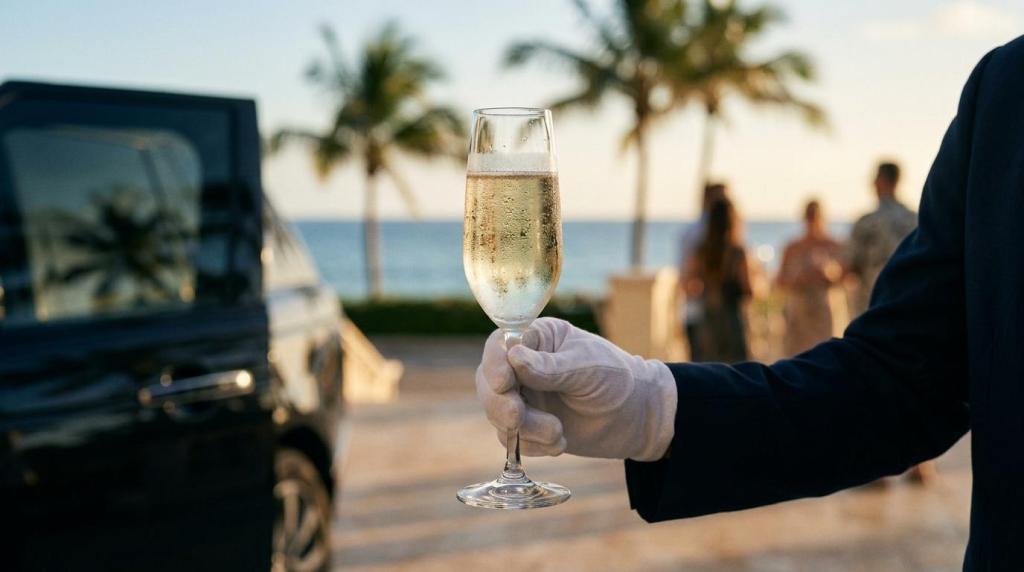
Number 1 works especially well for U.S.-based sales organizations that want high luxury without long-haul friction. South Florida can combine yacht arrivals, oceanfront resorts, curated nightlife, and polished executive hosting in a way that feels international without leaving the country.
How should you choose the right incentive trip destination for your sales team?
Start with the business goal. Miami and Los Cabos may both look attractive, but the right choice depends on what behavior you want to drive.
Step 1 is to define the reward’s job. If the goal is broad participation, choose a destination with easier access and lower friction. If the goal is to make elite performance feel rare, select a destination with stronger scarcity and prestige.
Step 2 is to map the audience. A field sales team with families may prefer a four-night domestic coastal stay. A high-earning enterprise team may respond better to an international resort or a Mediterranean cruise extension. If guests are invited, then room inventory, transfer design, and leisure options matter more than adrenaline-heavy programming.
Step 3 is to test the destination against your risk profile. Weather, seasonality, airlift, political stability, and medical access all affect experience quality. This is where a DMC or incentive planning partner adds real value. They pressure-test the concept before contracts lock you in.
Pro tip: do not choose a destination from a trend list alone. A place becomes motivating only when it fits the identity of the team earning it.
Should your incentive trip focus on adventure or luxury relaxation?
Usually, the best answer is both. Sedona and St. Barts show the same rule: energy creates buzz, while recovery makes winners feel genuinely rewarded.
Adventure formats work well for younger, high-competition sales teams or cultures that value challenge. Zip-lining, sailing regattas, off-road excursions, and canyon hikes create shared stories fast. They also produce the kind of content winners talk about long after returning home.
Luxury retreat formats work better when the audience is senior, time-poor, or partner-inclusive. Spa time, private beach clubs, Michelin-level dining, and spacious suites communicate value without forcing participation. That matters because mandatory fun can backfire at the executive level.
A common mistake is to treat these as opposites. If mornings are active and afternoons are open, you get the best of both. If your group spans different ages or physical comfort levels, then parallel experiences are smarter than one rigid agenda.
How do you set sales targets that make an incentive trip feel earned?
Clarity wins. Salesforce and HubSpot leaders alike know that vague qualification rules kill motivation faster than a weak destination.
Step 1 is to reward the behaviors that matter most. Revenue alone can distort selling. If your company cares about margin, renewals, strategic products, or new logos, then build those metrics into the qualification path.
Step 2 is to make the path visible. Publish the thresholds, update standings regularly, and explain tie-breakers before the contest starts. A trip feels aspirational only when the rules feel fair. If people suspect last-minute exceptions, trust erodes.
Step 3 is to use tiers where appropriate. A single elite threshold can work for President’s Club. A broader sales force may need multiple levels, like a top-winner trip, a regional luxury stay, or a premium experience day. Pro tip: “everyone can win” sounds generous, but it usually weakens urgency. The prize must remain selective.
What does a high-performing incentive trip agenda look like?
Balance is essential. Four to six days is the accepted sweet spot, and Ritz-Carlton or Four Seasons style pacing works because it protects both energy and exclusivity.
Step 1 is to front-load arrival impact. Private transfers, a polished welcome, and a first-night hosted experience set the tone immediately. Winners should feel the shift from routine to reward within the first two hours.
Step 2 is to build a rhythm, not a marathon. One signature excursion per day is enough. Add free time, a recognition dinner, and one business-forward touchpoint only if it serves a real purpose. If every hour is programmed, the trip starts to feel like a meeting.
Step 3 is to close with momentum. The final night should celebrate achievement and point forward. Executive remarks, a refined awards moment, and a teaser for next year extend the motivational life of the program.
A misconception worth correcting: more activities do not equal more value. Luxury is often felt through access, ease, and time, not density.
How much should a luxury incentive trip budget per person?
Expect a wide range. South Florida and the Caribbean often land between $4,000 and $20,000 per person, with many programs clustering around $6,000 before significant premium upgrades.
Budget depends on destination, group size, season, air class, and how much exclusivity you want to buy. A domestic five-star program may outperform a stretched international program if the latter sacrifices room quality, transfers, or guest experience. Sales teams notice details.
Budget allocation usually follows familiar industry patterns:
- Air and ground transportation: Often 30% to 40% of total spend
- Hotel and room categories: Commonly 25% to 35%
- Events and activities: Usually 15% to 25%
- Food and beverage: Often 10% to 15%
- Gifts, teasers, and branded touches: Usually 5% to 10%
If budget is constrained, protect the highest-signal items first: hotel quality, arrival experience, and one unforgettable signature moment. Cut complexity before you cut standards.
How do you measure incentive trip ROI beyond revenue?
Use a three-part model. IRF benchmarks and real-world programs show the best ROI cases combine sales lift, retention, and cultural impact.
Step 1 is to set a baseline before launch. Track participant revenue, margin, renewal rate, and voluntary turnover. Without a pre-program baseline, post-trip claims remain anecdotal.
Step 2 is to separate participant performance from the broader sales population. One widely cited range suggests participants can show 18% to 48% stronger sales growth than non-participants, while retention may improve 12% to 25%. If winners outpace peers after qualification and after the trip, that is meaningful signal.
Step 3 is to measure softer outcomes with discipline. Ask about loyalty, executive connection, and intent to qualify again. In one published incentive case, morale rose 30%, turnover fell 25%, and productivity rose 15% after a Costa Rica program. Another sales contest reported average winner sales volume up 105% during qualification.
Pro tip: CFOs often dismiss survey data, but that is a mistake. If revenue improves and loyalty scores rise together, the story becomes much stronger.
How to Choose the Best Incentive Trip Destination for Sales Teams?
Because access signals status. Equant and President’s Club style programs have shown that time with senior leadership can be as motivating as the travel itself.
Top sales performers want more than a room key and a beach chair. They want to be seen. Private dinners, leadership remarks, curated small-group time, and visible acknowledgment tell winners they are part of the company’s future, not just its quota history.
This matters for culture. If executives appear only at the awards dinner and vanish, the trip can feel outsourced. If leaders are present in selective, high-value moments, winners feel included without turning the trip into a board meeting.
The trade-off is restraint. Senior leadership should add prestige, not dominate the agenda. A short keynote and hosted dinner often do more than multiple formal sessions.
What mistakes reduce motivation or create avoidable risk on incentive trips?
Several mistakes are predictable. Cancun and Miami can both disappoint if qualification rules, contracts, or guest experience are handled casually.
The most damaging issues are usually preventable:
- Weak qualification logic: Revenue targets feel arbitrary or change midstream
- Over-programming: Winners feel managed instead of rewarded
- Cheap-visible choices: Lower-tier rooms, long waits, or mediocre transfers undercut prestige
- Contract blind spots: Attrition, cancellation, weather clauses, and vendor liability are not pressure-tested
- One-size-fits-all design: A mixed-age, mixed-role audience gets the same schedule regardless of preferences
A final misconception is that luxury means excess. It does not. Luxury means intentionality, privacy, confidence, and polished execution. If the trip removes friction, honors performance visibly, and gives people a story worth repeating, it will do its real job: motivate the next sales cycle before the plane even lands.
Leave a comment