


How to Plan Awards Ceremonies That Feel Premium
A premium awards ceremony does not begin with a bigger stage or a longer guest list. It begins with intent.
The most memorable recognition events feel polished because every choice supports the same goal: honoring people in a way that feels meaningful, effortless, and unmistakably high caliber. Guests notice the tone before the first award is presented. They feel it in the arrival, the pacing, the room, the hospitality, and the care behind every transition.
Why premium awards ceremony planning starts with audience intent
Many teams still assume that “premium” means more spectacle. In practice, senior audiences tend to respond to something more refined: relevance, comfort, personalization, and a few well-placed high-impact moments. Recent planner research points in the same direction. Attendee engagement now outranks simple event volume as a key measure of success, and many planners are choosing more flexible venue formats to create stronger guest experiences.
Attendee research also suggests that people remember peak moments more than constant production intensity. That matters for awards ceremony planning. A room full of executives, honorees, partners, and stakeholders does not need nonstop visual noise. It needs emotional precision.
A premium event should answer a few questions early. Who is being recognized, and why now? What should honorees feel on stage? What should sponsors, leadership, and invited guests say about the night the next morning? Those answers shape the script, venue, service style, and show flow.
After the event goals are clear, the premium markers become easier to define:
- Credible recognition
- Relaxed exclusivity
- High-touch hospitality
- Strong sightlines and acoustics
- Elegant pacing
- Distinctive brand presence
Premium venue selection for awards ceremonies
Venue choice sets the emotional temperature of the night. Ballrooms can work beautifully, though they are not the only path. Planner sourcing data shows growing interest in non-hotel spaces, largely because they allow more flexibility and stronger engagement. For awards ceremonies, that can mean private clubs, waterfront properties, museums, design-forward rooftops, estates, performing arts spaces, or architecturally distinctive venues with a sense of place.
The best venue is not simply the most expensive room available. It is the room that supports arrival drama, stage visibility, service flow, guest comfort, and polished transitions. A premium ceremony often feels intimate even at scale. That requires smart proportions. If the room is too large, applause gets lost. If it is too tight, service becomes distracting and VIP movement feels strained.
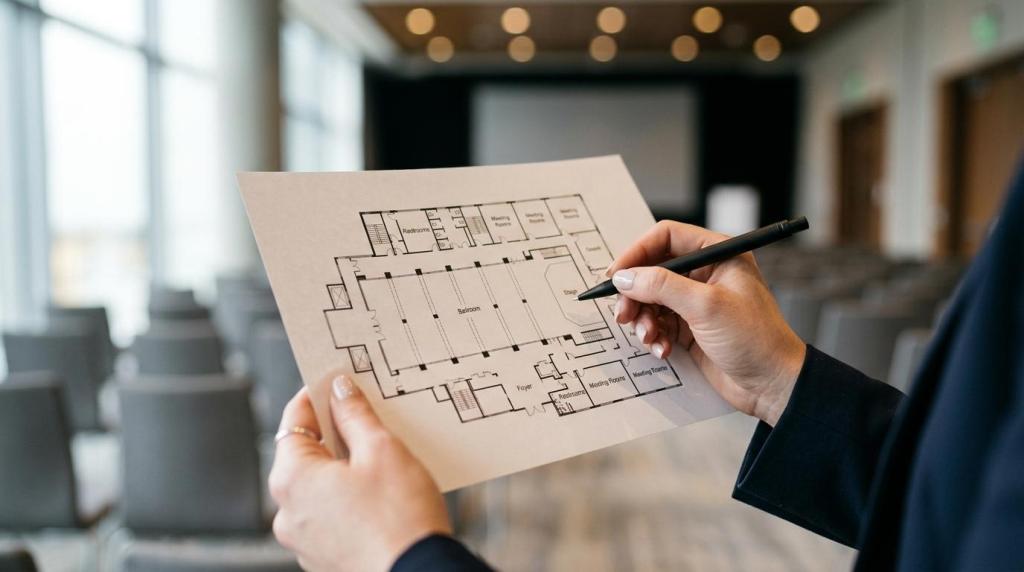
A strong venue review should go well beyond aesthetics. Teams should assess backstage access, loading conditions, power, rigging, ceiling height, acoustics, green rooms, private holding areas for presenters, ADA routes, restrooms, valet capacity, and weather contingencies for any outdoor component. In luxury event planning, the invisible logistics protect the visible glamour.
Here is a useful venue filter for an awards program:
| Venue factor | What to assess | Premium signal |
|---|---|---|
| Arrival experience | Valet, porte cochere, lighting, welcome staff, photo moment | Guests feel hosted within minutes |
| Room shape | Sightlines to stage, column placement, table density | No compromised views for key seating |
| Stage potential | Ceiling height, LED options, scenic flexibility, backstage access | The show feels custom, not rented |
| Service flow | Kitchen access, timing for plated service, bar placement | Hospitality stays quiet and smooth |
| Privacy | Buyout options, security, VIP holding areas | The event feels exclusive and protected |
| Accessibility | Step-free routes, accessible seats, companion seating | Premium service includes every guest |
Guest experience design for a luxury awards ceremony
Premium guest experience is built in sequence. Invitation. Arrival. Welcome drink. Seating. First impression of the room. Opening remarks. The first award. The dinner cadence. The emotional peak. The closing tone. Departure.
That sequence deserves as much attention as the stage design.
A luxury awards event should feel edited. Guests should not need to guess where to go, when to move, or what is happening next. Signage should be clear and restrained. Staffing should be warm and discreet. Registration should feel more like reception than processing. The program should move with confidence, with no dead air and no unnecessary resets.
Personalization is often where the premium feeling becomes real. A host greeting VIPs by name, a seat assignment placed with intention, a presenter introduction that sounds thoughtful rather than generic, or content that reflects the honoree’s actual contribution can do more for the room than another decorative layer.
Luxury is often just well-timed relief.
When a ceremony is planned well, guests are never left waiting too long for a drink, a course, a cue, or transportation home. That level of care creates calm, and calm reads as quality.
A few touchpoints tend to matter most:
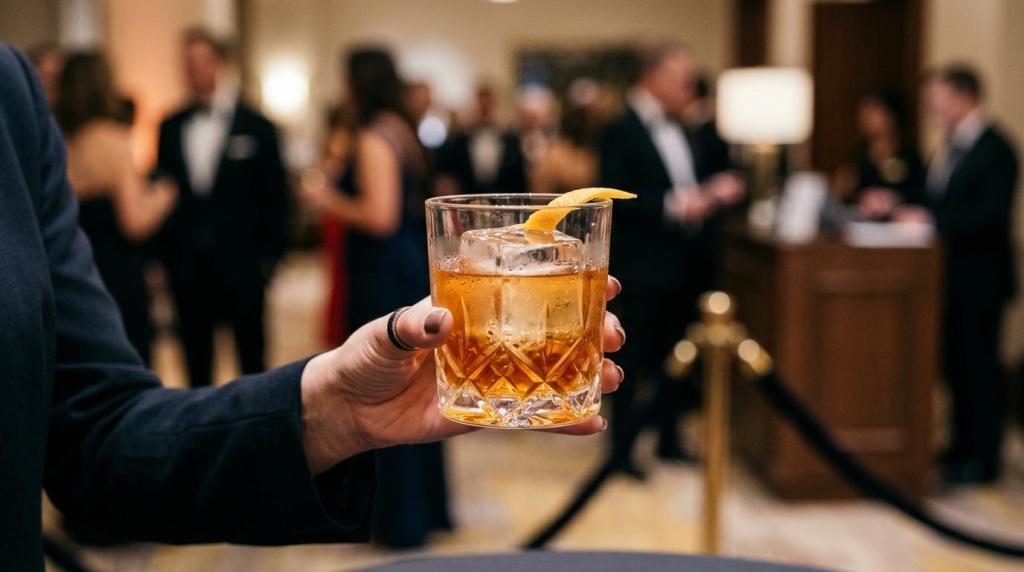
- Arrival: Host-led check-in, efficient valet, refined welcome cocktails, and immediate visual impact
- Seating: Clear place cards, intelligent VIP placement, comfortable spacing, and unobstructed views
- Recognition: Concise scripts, strong presenter-honoree pairings, and stage access that feels effortless
- Departure: Fast car retrieval, curated gifting, and a final moment that does not fizzle
Accessible awards ceremony planning is part of premium service
Accessibility is not a compliance box added late in the process. It is part of what makes an event feel thoughtful, professional, and worthy of the people being honored.
For ticketed events, ADA guidance is clear on several points. Accessible seats must be sold during the same hours, through the same purchase methods, and in the same sales stages as other seats. They also cannot be priced higher than non-accessible seats in the same section, and accessible seating should be available across the same price categories offered to the public. Companion seating matters too.
Those standards have direct planning implications. Seating maps, ticketing workflows, venue holds, guest communications, and on-site usher training should all reflect them from the start. A premium event cannot feel exclusive to some and inconvenient to others.
Accessibility also reaches beyond seats. Consider stage access for honorees, clear paths through cocktail spaces, accessible restrooms, captioning or screen legibility, lighting choices that do not overwhelm, dietary planning, and transportation details. If a ceremony includes after-parties or off-site elements, those should be reviewed with the same care.
This is one area where polished planning and respectful planning are exactly the same thing.
Production choices that make awards ceremonies feel expensive
The fastest way to lose a premium atmosphere is to overproduce the wrong elements and underproduce the essentials.
Sound quality, cue timing, content editing, and stage management matter more than novelty for novelty’s sake. Guests may not talk about the audio mix when it is excellent. They will absolutely talk about it when it is poor. The same is true for lighting, teleprompter pacing, and screen content that runs too long.
A premium show needs a disciplined run-of-show. Award categories should be ordered with intention. Speech lengths should be brief and clearly communicated. Presenter notes should be polished. Walk-up music should be cued and tested. Camera positions should support both the room and post-event content capture.
Restraint can look richer than excess.
Awards ceremony stage design and show flow
Stage design should frame recognition, not compete with it. A clean scenic concept, strong lighting, rich materials, and sharp branding usually outclass cluttered visual layers. As Selskabskælderen notes in its guidance on sound insulation for event spaces, poor room treatment and spill from adjacent areas can flatten speeches and music, undermining even well-executed staging. Premium aesthetics often come from proportion and finish quality rather than raw quantity.
Awards ceremony rehearsals and backstage operations
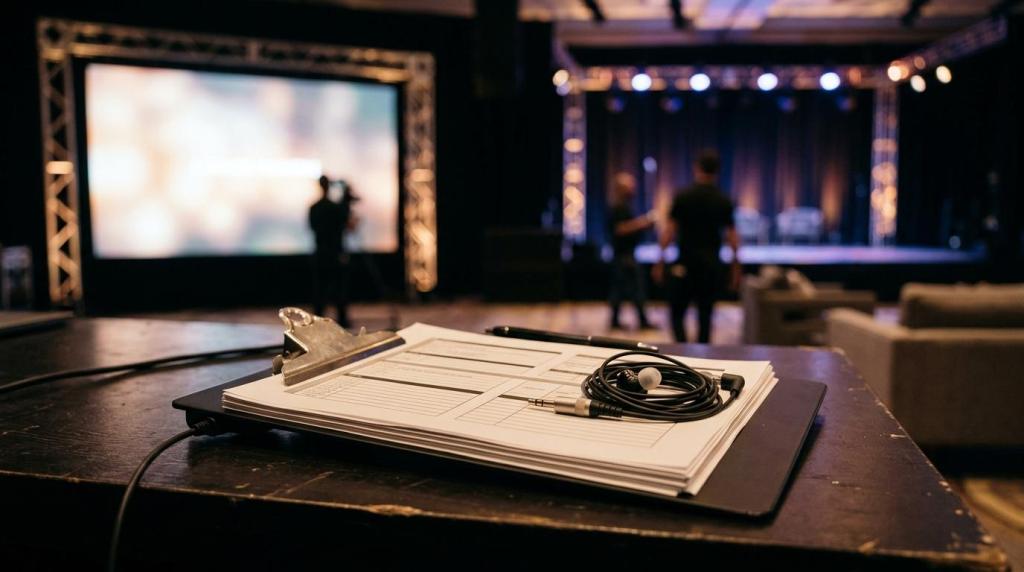
Backstage discipline protects front-of-house elegance. Rehearsals should cover walk paths, microphone handoffs, confidence monitor timing, script changes, award placement, and presenter transitions. Even highly experienced executives benefit from a quick stage orientation.
A planning partner managing concept through on-site execution should also own the details guests never see: setup diagrams, speaker coordination, vendor timing, rooming lists where relevant, contingency plans, and live issue handling.
Executive-level event planning operations behind the scenes
Premium events are rarely defined by one dramatic flourish. They are defined by consistency.
That consistency comes from rigorous pre-production. Contracts should be reviewed with care. Load-in schedules should protect the venue and the guest experience. Risk planning should address weather, transportation, staffing backups, security, and program timing. If the ceremony is tied to a conference, incentive trip, or executive retreat, the awards program should fit the broader schedule without draining energy from the room.
This is where a boutique, high-touch planning model often makes a difference. Senior teams tend to value direct access, quick decisions, and planners who can move from strategy to logistics without losing the thread. For international groups and destination programs, local relationships matter too. The best luxury experiences feel rooted in place while still meeting enterprise expectations for process, reporting, and accountability.
When those operating layers are strong, leadership can focus on hosting, honorees can focus on the moment, and guests can simply enjoy the night.
Budget priorities for a premium awards ceremony
A larger budget can help, though budget alone does not create premium perception. Allocation is what matters.
Too often, teams overspend on visible flourishes and underspend on the items that shape guest comfort and event credibility. If the room is beautiful but the show runs long, the check-in line drags, and the accessible seating plan is weak, the event will not feel premium no matter how much was spent.
The most effective investments usually include:
- Guest flow: arrival staffing, check-in design, valet strategy, and clean directional cues
- Production quality: audio, lighting, stage management, content editing, and rehearsal time
- Hospitality: excellent food and beverage timing, thoughtful VIP service, and post-event departure planning
- Room experience: table spacing, sightlines, seating comfort, and décor with real finish quality
There is also strong value in protecting contingency funds. Weather backup, last-minute transportation adjustments, replacement rentals, and show-day technical fixes are not glamorous line items, though they protect the premium atmosphere when something shifts.
What guests remember after a premium awards event
Guests remember how the night made them feel about the organization behind it.
If the event felt gracious, well-paced, inclusive, and confident, that impression stays attached to the brand, the leadership team, and the honorees themselves. Recognition becomes more than a segment of the program. It becomes proof of standards.
That is why the strongest awards ceremonies are not built around excess. They are built around clarity, care, and control. When the venue is distinctive, the guest flow feels personal, the production is disciplined, and accessibility is fully built in, the evening carries the kind of polish people describe as premium without needing to be told it is.
Leave a comment