


Best Team Retreat Formats for Hybrid Companies
Team retreats matter more in hybrid companies because trust, speed, and culture rarely grow from calendars and chat threads alone. A well-designed retreat solves the core hybrid problem: teams can stay connected operationally while still feeling fragmented socially and strategically. The right format brings distributed employees into the same decision rhythm, strengthens belonging, and turns time away from routine work into measurable business progress. The wrong format simply moves meetings to a nicer backdrop.
What retreat format works best for most hybrid companies?
Hybrid retreats are the strongest default for distributed teams because they combine face time with accessibility. Zoom and Microsoft Teams make attendance possible, but they do not replace the trust built through shared meals, workshops, and informal conversation.
For most organizations, the best answer is not one format for every event. It is a portfolio. Company-wide gatherings usually perform best in a hybrid or multi-location model. Leadership strategy sessions usually perform best in person. Short learning or onboarding moments can stay virtual.
The key is matching format to purpose. If the goal is culture renewal, cross-functional trust, or executive alignment, prioritize physical presence. If the goal is information sharing across time zones, hybrid wins. If the goal is speed and convenience for a specific topic, virtual can be enough.
A common misconception is that hybrid means streaming a ballroom to remote viewers. It does not. The strongest hybrid retreats are designed as three experiences at once: the in-room experience, the remote experience, and the moments that connect both.
Comparing In-Person vs. Hybrid Team Retreats: Trust, Cost & Logistics
In-person retreats build trust faster, while hybrid retreats widen access and reduce travel friction. Four Seasons and Zoom illustrate the trade-off clearly: immersion is strongest on site, reach is strongest when remote participation is designed properly.
| Factor | In-person retreat | Hybrid retreat |
|---|---|---|
| Trust building | Highest, with more informal interaction | Strong, if remote participants are actively integrated |
| Inclusivity | Lower when travel, visas, caregiving, or health limit attendance | Higher across geographies and schedules |
| Cost structure | Higher travel, lodging, transfers, F&B | Lower travel spend, higher AV and production spend |
| Logistics | Simpler content flow, heavier travel management | More moving parts, especially tech and facilitation |
| Best use case | Leadership, innovation, executive planning | All-hands, distributed departments, regional teams |
If your team is concentrated in one region, in-person may still be the cleanest option. If your workforce spans New York, London, and São Paulo, hybrid usually protects participation without sacrificing strategic depth.
Pro tip: lower travel cost does not mean lower production standards. In hybrid formats, poor audio hurts more than average décor.
What team retreat formats are best for hybrid companies?
The best retreat formats are purpose-built, not trendy. Experience Epic Events and Palm Beach destination venues are strong examples of how format, setting, and facilitation can work together when the brief is executive-level and international.
The smartest formats tend to cluster around how distributed your team is and what outcome you need from the gathering.
- Experience Epic Events-managed destination hybrid retreat: Best when a company wants boutique planning, proactive contract controls, and a luxury South Florida or destination experience that treats on-site and remote attendees as equal stakeholders.
- Single-destination leadership offsite: Best for executive teams making high-stakes decisions that require privacy, candor, and extended working sessions.
- Hub-and-spoke regional retreat: Best for global companies that want in-person energy in several cities while connecting key sessions across locations.
- Virtual strategy sprint retreat: Best for short planning cycles, manager training, or quarterly resets where travel would slow decision-making.
- Recognition and incentive retreat: Best for retention, top-performer reward, and culture signaling, especially when experience quality matters as much as agenda content.
The trade-off is simple. The more strategic and relational the goal, the more valuable physical presence becomes. The more global and time-sensitive the goal, the more hybrid design earns its place.
How do you choose the right retreat format in 3 steps?
The right format follows business intent first, logistics second. Miro and Slido can support any model, but neither tool can rescue a retreat built around the wrong objective.
Step 1 is to define the primary outcome. Is this retreat meant to solve, celebrate, train, or align? If you need decision-making and trust repair, choose in-person or hybrid with strong in-room hubs. If you need broad participation and message consistency, choose hybrid.
Step 2 is to map the audience reality. Where are people located? What time zones, visa needs, accessibility needs, and travel tolerances apply? If more than 25 to 30 percent of the audience faces difficult travel, hybrid often protects attendance and morale.
Step 3 is to test the delivery burden. If your venue cannot support dedicated bandwidth, clean audio, and a technical rehearsal, do not force a hybrid model. In that case, shift to either fully in-person or fully virtual for that event cycle.
A useful rule is this: if the risk of exclusion is higher than the benefit of immersion, go hybrid. If the risk of fragmented discussion is higher than the benefit of reach, go in person.
How should you structure a hybrid retreat agenda in 3 steps?
The best hybrid agenda is paced, not packed. Harvard-style executive sessions and Zoom blocks both fail when attention is treated as unlimited.
Step 1 is to anchor the day with one or two high-value live moments. These are the sessions everyone should experience together, such as leadership remarks, strategic priorities, or a cross-functional workshop. Keep live blocks to roughly 90 to 120 minutes.
Step 2 is to alternate intensity. Pair a strategy session with networking, wellness, or local immersion. Hybrid teams retain more when formal content is followed by conversation and reflection, not another slide deck.
Step 3 is to separate synchronous from asynchronous content. Record updates, pre-send briefing materials, and reserve live time for discussion and decisions. That protects global teams from all-day screen fatigue and gives on-site attendees more space for human connection.
Common mistake: trying to fit a full conference agenda into one retreat day. Executive audiences value clarity and momentum more than volume.
How do hybrid and virtual team retreats compare on ROI and inclusion?
Hybrid retreats usually outperform fully virtual retreats when the goal is alignment and culture. Microsoft-cited connection data and Gallup profitability findings both point to the same pattern: stronger human ties improve performance.
| Measure | Hybrid retreat | Virtual retreat |
|---|---|---|
| Accessibility | High | Highest |
| Emotional connection | Moderate to high | Low to moderate |
| Screen fatigue risk | Moderate | Highest |
| Cost efficiency | Strong | Strongest |
| Strategic depth | Strong | Limited unless sessions are very short |
Virtual retreats still have a place. They work well for manager training, onboarding, and quarterly resets. They struggle when companies expect them to produce the same trust and serendipity as a destination gathering.
If your main KPI is attendance, virtual can win. If your main KPI is cross-functional commitment, hybrid usually produces better follow-through. That is why many hybrid companies reserve travel for the moments where relationship equity matters most.
How do you make remote attendees feel equal, not secondary, in 3 steps?
Remote attendees can feel fully included, but only if equity is designed into the program. Slido and Mural help, yet facilitation discipline matters more than software.
Step 1 is to build parallel touchpoints. Send premium welcome kits, dining credits, printed workbooks, or tasting boxes so remote participants are not watching others receive the full experience. Equality is partly emotional signaling.
Step 2 is to assign dedicated roles. One facilitator should manage the room, while another manages remote chat, questions, and transitions. If one person tries to do both, remote engagement drops quickly.
Step 3 is to create mixed interaction. Use breakout groups that combine on-site and remote participants. Put a camera or mobile device at each table when needed. If people only interact within their physical location, the retreat becomes two separate events.
Pro tip: remote equity is not about giving everyone the same thing. It is about giving everyone equivalent value.
What retreat length works best for hybrid teams?
Two to three days is the strongest range for most hybrid retreats. Palm Beach resort programs and executive offsites in Miami both show the same pattern: one day feels rushed, while more than three days can dilute focus unless the agenda is highly strategic.
A one-day retreat can handle messaging and light team-building. It rarely gives enough time for deep work, informal bonding, and recovery between sessions. A two-day format works well for department alignment or manager gatherings. A two-and-a-half to three-day format is better for leadership planning, change management, or culture reset.
Virtual content should be shorter. Think half-day blocks or a series of sessions spread across multiple days. Attention quality matters more than calendar density.
A common myth is that more content means more value. In practice, decision quality usually improves when teams have protected time for meals, walks, and unstructured conversation.
Which technology stack actually matters for a hybrid team retreat?
The essential stack is simple: stable video, excellent audio, and interactive collaboration. Zoom, Teams, Slido, and Miro cover most needs when the production design is sound.
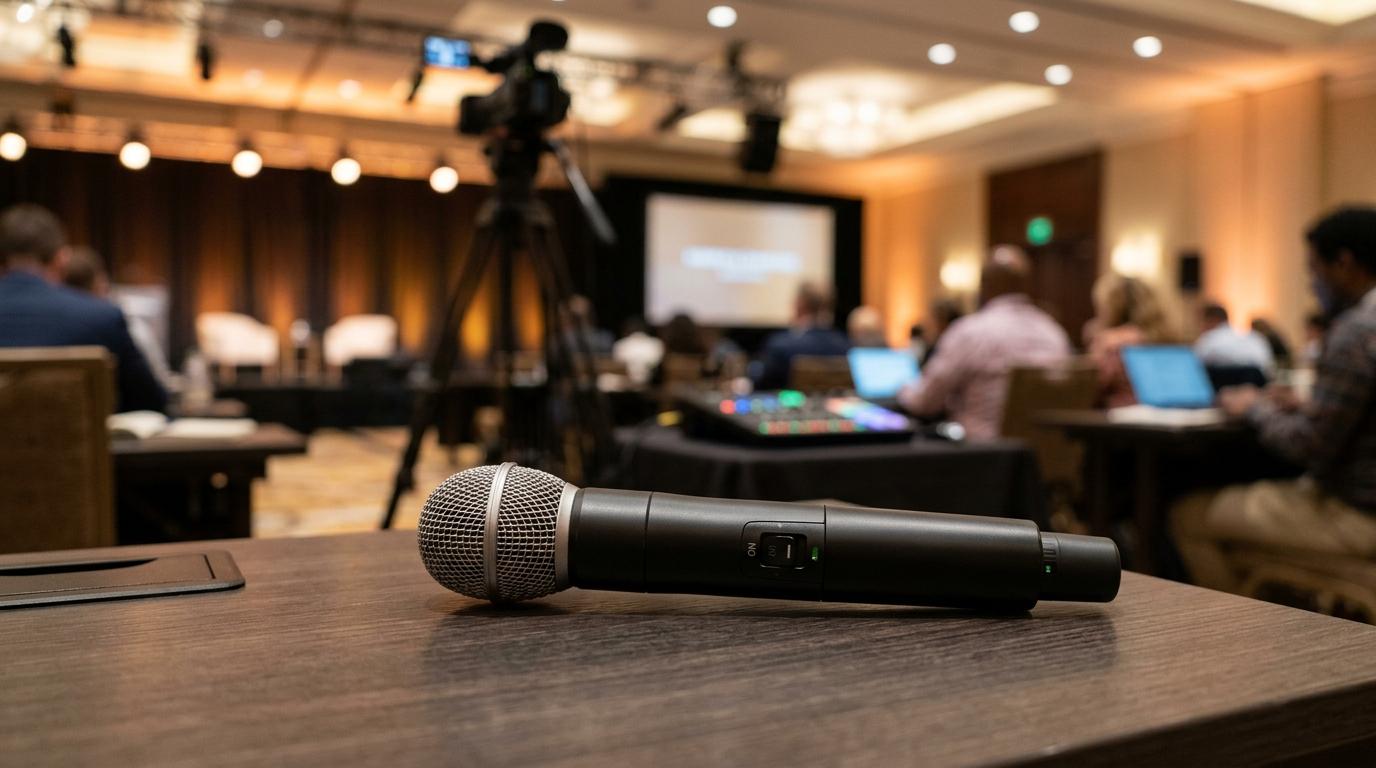
Start with the basics. Use dedicated microphones, confidence monitors, hardwired internet where possible, and a roaming camera for workshops or networking moments. Many venues advertise strong Wi-Fi, yet hybrid production often requires dedicated bandwidth beyond guest internet. A practical standard is a reserved, symmetrical connection with backup support, not shared resort Wi-Fi.
Then add collaboration tools with intention. Polling tools are ideal for live sentiment checks. Digital whiteboards help mixed-location brainstorming. Event apps can centralize agendas, maps, speaker notes, and post-session surveys.
Pro tip: expensive tech does not fix weak room flow. If remote participants cannot hear side comments or see who is speaking, even a premium setup will feel second-rate.
How should executives budget for a high-end team retreat?
A premium retreat budget should protect experience, risk, and outcomes at the same time. Marriott and Four Seasons may look comparable at first glance, yet service standards, AV readiness, and contract terms often reshape the real cost.
The strongest budgets separate strategic investments from prestige spending. Spend where it changes participation, comfort, or decision quality. Be cautious with aesthetic upgrades that look impressive but do little for the attendee journey.
Budget models should usually include these categories:
- Venue and room block: Guest room rates, meeting space rental, resort fees, attrition clauses
- Travel and transfers: Air, ground, VIP arrivals, baggage handling, meet-and-greet support
- Food and beverage: Welcome reception, working meals, dietary accommodations, premium hospitality
- Production and AV: Streaming, microphones, lighting, staging, recording, technical rehearsals
- Experience design: Facilitators, entertainment, destination activities, branded materials
- Risk controls: Insurance, medical planning, cancellation terms, contingency reserve of roughly 10 to 15 percent
If attendance certainty is low, negotiate attrition and cancellation terms early. If the audience is global, duty of care and transfer logistics deserve the same attention as agenda design.
What metrics show whether a team retreat actually worked?
A successful retreat produces measurable movement, not just good energy. Gallup-style engagement signals and simple operational metrics can show whether the event changed behavior after the applause ended.
Start with pre- and post-retreat measures. Ask what decisions needed to be made, what relationships needed repair, and what behaviors needed reinforcement. Then measure the shift 30, 60, and 90 days later.
Useful indicators often include:
- Attendance quality and participation rate
- Cross-functional meeting follow-through
- Employee pulse scores on trust, clarity, and belonging
- Manager-reported decision speed
- Retention trends in key teams
- Pipeline, project, or launch milestones tied to retreat goals
One more misconception is worth flagging: satisfaction scores alone are not ROI. A retreat can feel luxurious and still miss the business mark. The best programs pair emotional impact with documented action, which is exactly why format choice matters so much at the start.
Leave a comment