


Conference Management vs Conference Planning
A successful conference rarely depends on good ideas alone. It depends on structure, timing, control, and the ability to keep hundreds or thousands of moving parts working together under pressure. That is where many organizations confuse conference planning with conference management.
The terms are often used as if they mean the same thing. They are related, but they are not interchangeable. Planning is a major part of the work. Management is the wider discipline that carries the event from early concept through live delivery, issue response, financial reconciliation, and post-event review.
For executive teams, marketing leaders, and people teams investing serious budget into a conference, that distinction matters. It affects staffing, accountability, risk exposure, attendee experience, and the confidence of internal stakeholders who need the event to perform at a high level.
What conference planning includes before the event
Conference planning usually refers to the front-end work that shapes the event. This is where objectives are set, audience needs are defined, budgets are modeled, venues are sourced, and the event framework starts to take form. It is strategic, creative, and highly detailed.
According to the U.S. Bureau of Labor Statistics, event professionals handle attendance estimates, event purpose, venue bids, room coordination, transportation, food service, billing, and attendee satisfaction. Those tasks sit firmly inside planning, though many of them continue into management once the event goes live.
Planning also sets the tone of the conference. It covers brand expression, content flow, room design, speaker needs, registration architecture, VIP handling, and the guest experience from invitation to departure. In a premium environment, planning is also where quality standards are defined. The question is not only whether a conference can happen, but whether it will feel polished, intentional, and worth the investment.
Typical planning outputs include:
- Event objectives
- Budget framework
- Site selection
- Agenda architecture
- Vendor sourcing
- Registration strategy
- Speaker coordination
- Guest communications
Planning is essential, but it is only part of the picture.
What conference management includes across the full event lifecycle
Conference management includes planning, but it goes further. It covers the full operating system behind the event. That means monitoring progress, managing people and vendors, adjusting timelines, responding to risk, directing onsite teams, and closing the event properly once attendees leave.
MPI describes event management as a process that includes initiating, planning, executing, monitoring/controlling, and closing. That framework is useful because it makes the difference visible. Planning is one stage. Management includes the stages around it, especially live execution and active control.
This is why conference management tends to be the better term for complex business gatherings, multi-day meetings, leadership summits, incentive conferences, and citywide programs. A luxury conference with executive audiences, sponsor obligations, production layers, security concerns, and demanding guest expectations needs more than a planner. It needs a management structure.
That structure shows up in practical ways. There are production schedules, vendor call times, room-turn plans, transportation manifests, backup protocols, escalation paths, staffing plans, onsite command roles, and post-event financial review. Without those controls, even a beautifully planned conference can start to fray the moment real-time conditions shift.
Conference planning vs conference management: key differences
The simplest way to separate the two is this: planning designs the event, management delivers it.
| Area | Conference Planning | Conference Management |
|---|---|---|
| Primary focus | Event design and preparation | Full lifecycle control |
| Timing | Mostly pre-event | Pre-event, live event, post-event |
| Core questions | What are we creating? | How will this run, adapt, and close successfully? |
| Main outputs | Budget, venue, agenda, vendors, communications | Timelines, staffing plans, issue response, onsite operations, reporting |
| Team style | Strategic and developmental | Strategic, operational, and supervisory |
| Risk role | Anticipates common issues | Monitors, responds, escalates, documents |
| Success measure | A strong event plan | A strong event outcome |
That broader scope is what protects the conference when conditions change. Speakers miss flights. Weather affects arrivals. A ballroom flip runs late. A registration surge creates a queue. A sponsor requests a late activation change. A VIP needs a private transfer added with little notice.
Planning may have prepared for those scenarios. Management is what handles them in real time.
Why executive teams need conference management, not only planning
At the executive level, a conference is rarely just an event. It may be a revenue platform, a brand statement, a leadership touchpoint, a channel partner forum, or a culture-building moment. That raises the stakes.
When a company invests in a premium conference, leadership is not paying for a checklist. Leadership is paying for control, judgment, and a standard of delivery that supports business outcomes. That is the space where management becomes essential.
This is also where stakeholder confidence is built. Internal teams want clarity on budget status, registration pace, content dependencies, production readiness, and risk exposure. A management-led model creates reporting rhythms and decision paths that keep the event from becoming opaque or reactive.
For organizations hosting conferences across South Florida, major U.S. destinations, or international markets, the case gets even stronger. Local permitting, venue practices, transportation realities, cultural expectations, staffing norms, and hotel operations can vary widely by market. Management ensures that strategy is translated into practical delivery on the ground.
A management-led conference typically gives executive stakeholders more of the following:
- Clear ownership: one structure for decisions, logistics, communication, and escalation
- Live visibility: active reporting on timelines, budgets, vendor status, and guest flow
- Risk response: predefined plans for weather, travel disruption, staffing gaps, and technical issues
- Brand protection: tighter control over attendee touchpoints, service quality, and room experience
- Post-event value: reconciliation, debriefing, and measurable follow-up
Conference staffing, timelines, and project-management tools
The staffing picture also changes when you move from planning to management. During early planning, the team may center on strategy, creative, venue sourcing, registration, and content development. As the conference approaches, the operation widens. Production leads, travel coordinators, rooming specialists, transportation managers, registration supervisors, floor managers, security, and VIP hosts may all enter the mix.
That complexity is one reason the profession is so experience-driven. BLS data shows that prior work experience and on-the-job training are common requirements for meeting, convention, and event planners. The work depends on judgment as much as technical skill. You can build a timeline on paper. Running that timeline under pressure is a different standard.
MPI has also pointed to shared project-management tools and weekly check-ins as strong operating habits for conference teams. That advice holds up well in executive conference environments. A premium event should not depend on memory, scattered email threads, or fragmented vendor communication. It should run through structured systems, active reviews, and disciplined ownership.
When conference management is done well, the workflow tends to include:
- Master timeline control
- Weekly stakeholder reviews
- Vendor status tracking
- Production run of show
- Rooming and travel oversight
- Financial monitoring
- Onsite command structure
- Post-event reporting
A refined conference experience often looks effortless to the guest. Behind that calm surface, the management operation is usually exacting.
Conference staffing shifts from design to live control
This shift is where many internal teams get caught off guard. They budget for planning support, then realize late in the process that the live event needs a command layer, not just a coordinator.
That command layer matters most when the conference includes multiple venues, high-level presenters, private executive sessions, sponsor deliverables, custom production, or a destination audience arriving on staggered travel schedules.
Risk management and live issue response in conference management
Risk management is one of the clearest dividing lines between planning and management. Planning identifies likely problems and creates backup options. Management monitors conditions, makes fast decisions, documents changes, and keeps the event moving without unnecessary disruption to the guest experience.
In conference environments, risk is not limited to emergencies. It also includes service failures, timing drift, missed cues, contractual exposure, staffing fatigue, transportation gaps, registration bottlenecks, food and beverage misfires, and communication breakdowns between vendors. Small failures can ripple into larger brand problems if nobody is actively controlling the event.
This is why a management model needs more than a timeline. It needs thresholds for action. Who approves a room reset? Who can authorize overtime? What happens if a keynote arrival changes? Which vendor owns replacement equipment? How are weather alerts handled for offsite events? Who is responsible for attendee communications if a session moves?
A strong conference management plan usually includes two layers of protection:
- Preventive controls: detailed schedules, vetted vendors, contract review, staffing plans, rehearsals
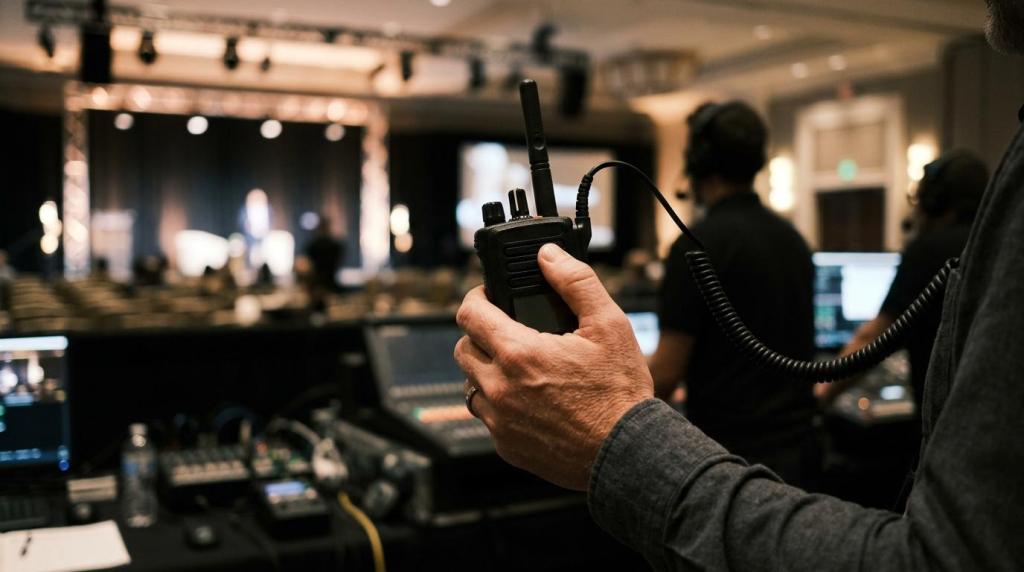
- Active controls: onsite command, radio protocols, monitoring/controlling, decision logs, backup deployment
In a luxury environment, issue response must be disciplined and discreet. Guests should feel cared for, not exposed to backstage stress.
Post-event follow-up is part of conference management too
One of the most overlooked parts of conference management comes after the closing session. Many teams treat the event as finished once the ballroom empties. In practice, important work remains.
Post-event management includes vendor bill review, reconciliation against budget, attendee feedback, sponsor fulfillment review, internal debriefing, performance analysis, and recommendations for future programs. BLS includes bill review and attendee satisfaction among planner responsibilities, which reinforces the point that event success is judged after the live experience as well as during it.
For companies running annual conferences or executive meeting series, this stage is valuable because it turns one event into a smarter foundation for the next. Patterns become visible. Registration behavior, room pickup, transfer demand, staffing ratios, content engagement, and service pressure points can all inform future decisions.
It also protects financial discipline. Premium conferences can involve substantial production, hospitality, travel, and venue spend. Post-event review helps confirm that value matched the original business case.
Choosing the right conference management support for complex events
The right support model depends on the scale and visibility of the conference. A smaller, single-room meeting with limited production may need planning support and a lean onsite team. A multi-day leadership conference, incentive-linked meeting, or branded corporate summit usually needs a true management structure from the start.
A useful screening question is simple: does the team need help creating the event, or help controlling the full event lifecycle? If the answer includes Risk management, live logistics, executive guest handling, vendor command, and post-event reporting, the need is conference management.
When evaluating partners, decision-makers should look past creative decks and ask operational questions. How are project-management tools used? Who owns the master timeline? How are vendors supervised onsite? What is the escalation path during live issues? How is budget drift tracked? What does post-event reconciliation include?
Strong conference delivery comes from disciplined planning, but premium conference performance comes from management. That is the difference between having a well-designed event on paper and having a conference that holds its standard from first invitation to final invoice.

Leave a comment